Chef Knife Buying Guide: Steel, Size & Value 2026
About Misen
We make kitchen tools that work better, last longer, and cost less than you’d expect: everyday innovations with a radical focus on our customers’ actual need.
Summary
Learn how steel type, blade size, and maintenance practices shape a chef knife's performance and longevity. The right knife at any price point transforms your cooking experience through informed choices about hardness, balance, and proper care.
What Makes a Good Chef Knife: The Core Elements That Matter
Japanese knives hold a razor edge longer but require more careful handling, while German steel forgives mistakes and resharpens easily on standard equipment.
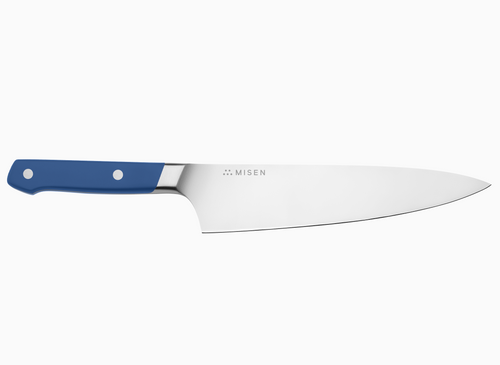
Steel Type and Edge Retention: German vs. Japanese MetallurgyThe steel in a chef knife determines how long it stays sharp, how it handles stress, and how much maintenance it demands. German knives typically use steel rated 56-58 HRC (Rockwell hardness), making them more forgiving--less likely to chip and easier to resharpen on a standard honing steel [3].
Japanese knives run harder at 60-62 HRC, holding a razor edge longer between sharpenings but more prone to chipping on hard materials like bones [2]. High carbon content above 0.5% drives hardness and edge retention in both traditions, while chromium content above 13% adds corrosion resistance--a useful reference point when reading any knife anatomy breakdown or spec sheet [1].
Blade Balance, Weight, and Comfort: Why Handling Matters More Than You Think
Balance refers to how weight is distributed between blade and handle, and it shapes every cut--control, fatigue, and precision all follow from it. Blade-heavy knives, typical of Japanese designs, fall through food with less effort, while neutral or handle-heavy knives better support the rocking motions common in Western cooking [4].
Weight follows the same logic: heavier knives generate momentum for dense ingredients like squash or thick cuts of meat, while lighter knives offer the agility needed for fine herb work or fish [4]. Handle ergonomics--shape, material, and fit--are the most personal part of the decision; a contoured handle distributes pressure evenly and stays secure even with wet hands, and materials like pakkawood or stabilized wood resist moisture without adding unnecessary weight [5].
Chef Knife Sizes and Shapes: Choosing the Right Blade for Your Kitchen
An 8-inch chef knife handles roughly 80% of home cooking tasks while fitting naturally with how most cooks grip and move their hands.
The 8-Inch Standard: Why Most Home Cooks Start Here
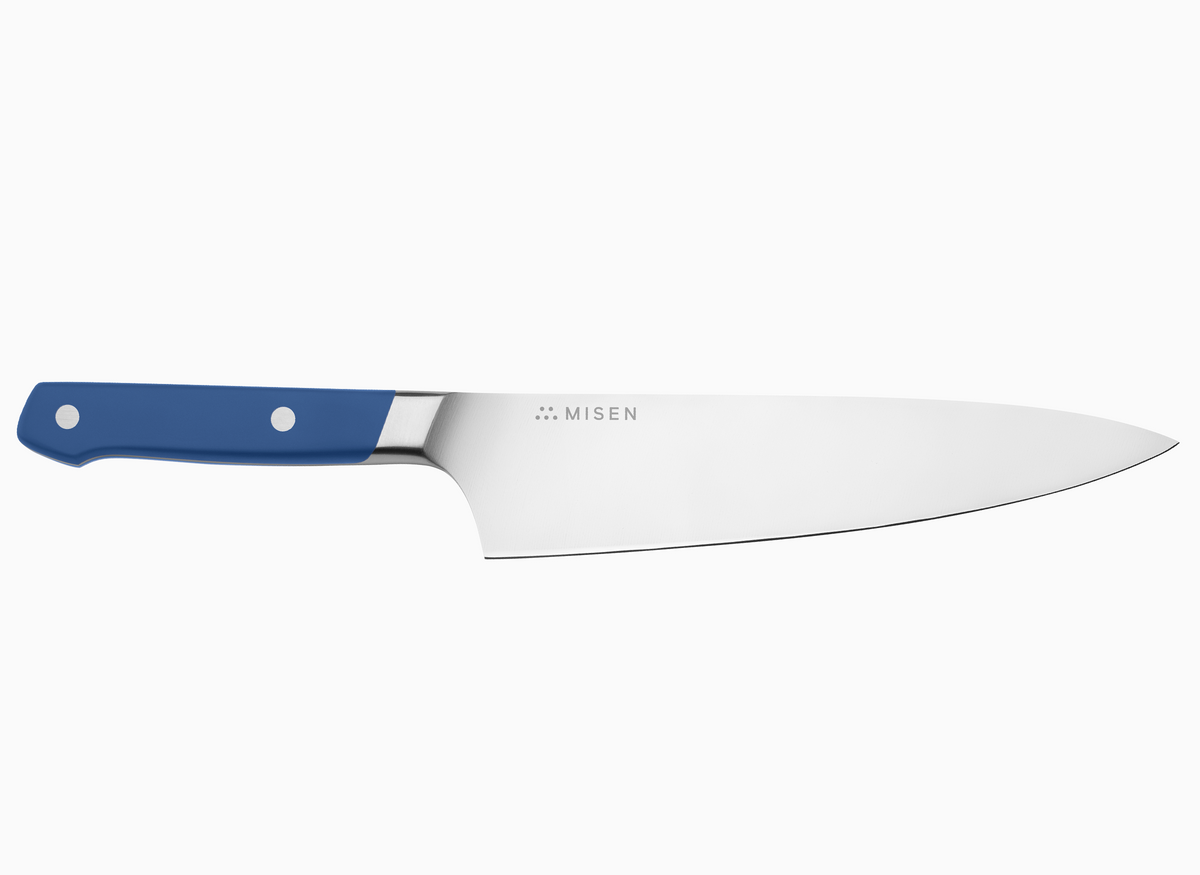
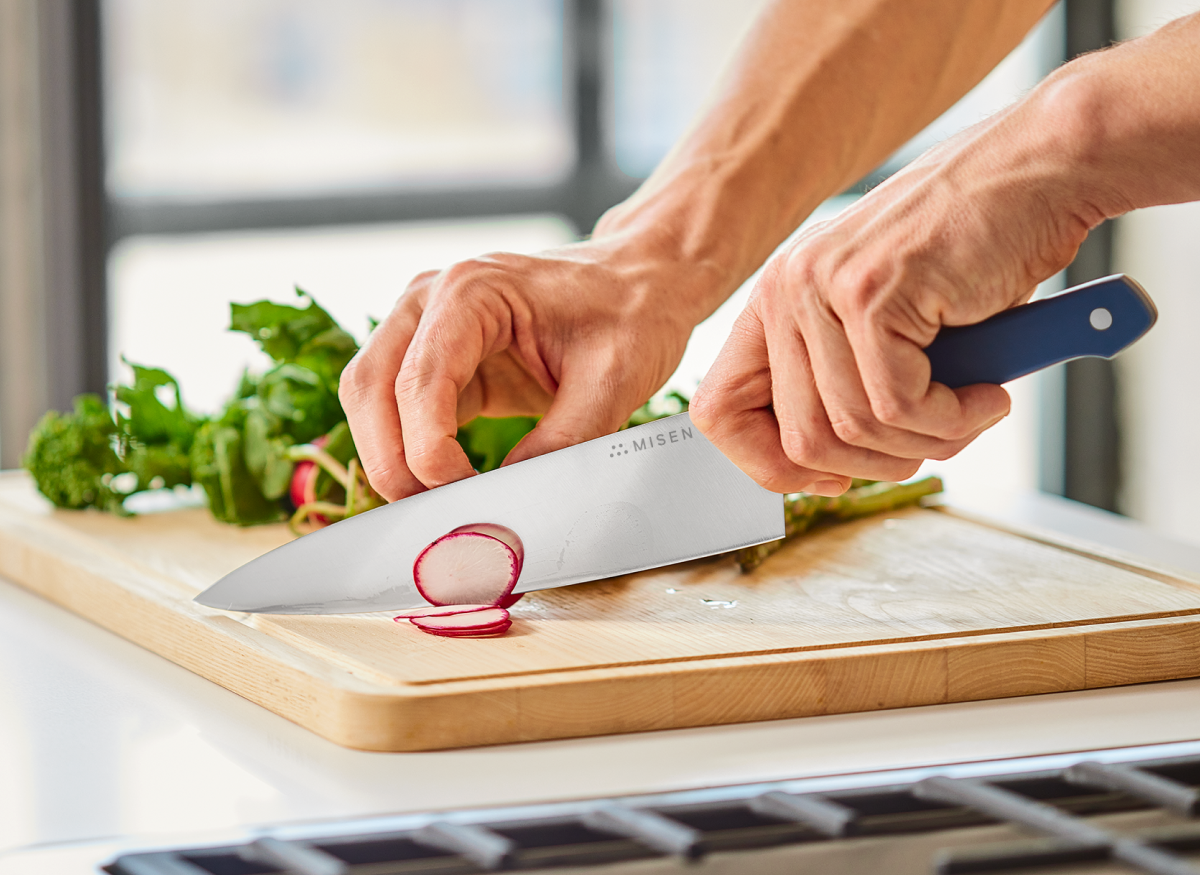
The 8-inch chef knife covers roughly 80% of home cooking tasks -- chopping vegetables, slicing proteins, mincing herbs -- without requiring the technique or workspace that longer blades demand [6]. Its balance point naturally aligns with where most cooks grip the knife, which reduces wrist fatigue during longer prep sessions [6].
Most standard home cutting boards (around 12x18 inches) fit an 8-inch blade cleanly, while a 10-inch will overhang and limit your stroke -- pairing the right board with your knife matters, and our end-grain vs. edge-grain guide covers exactly that [6]. Many culinary schools default to this size because it scales well across hand sizes and task types, making it the most practical first chef knife for home cooks [7].
6-Inch, 7-Inch, and Specialty Blades: When to Go Smaller or Larger
A 6-inch chef knife trades reach for control -- it's the better choice for cooks with smaller hands, compact workspaces, or tasks that demand precision over power, like breaking down shallots or segmenting citrus [8]. The 7-inch sits between the compact and the standard, offering slightly more surface area without the commitment of a full 8-inch blade -- a useful middle ground if you find standard-length knives unwieldy [9].
Specialty blades follow a similar logic: a santoku, with its straighter edge and thinner profile, excels at chiffonade and julienne cuts where a rocking motion would bruise delicate herbs, while a utility knife in the 5-6 inch range handles in-hand tasks like trimming and peeling that a full chef knife's width makes awkward [9]. Finding Quality at Every Price Point: Value vs. Professional Grade
Budget-Friendly Chef Knives: What You Get Under $100
The under-$100 range delivers more than most buyers expect. The Victorinox Swiss Classic (around $60) and the Mercer Culinary Genesis (around $40) both held sharp edges through hands-on testing, with the Genesis emerging sharp out of the box and maintaining that edge throughout extended use -- all without sacrificing the grippy, easy-to-control handle that makes it practical for daily prep [10].
For a Japanese-style chef knife at this price, the Tojiro F-808 gyuto uses a harder steel core for standout edge retention, though that same hardness makes it prone to chipping on dense ingredients like butternut squash -- a real tradeoff worth considering before you commit [11]. The Mercer Culinary Renaissance, also under $60, offers high-carbon stainless steel and full-tang construction that consistently outperforms its price point, though the softer steel means more frequent sharpening compared to pricier picks [10].
Mid-Range and Professional Knives: Investment Tiers and When to Upgrade
The $100-$200 range is where edge retention and build quality make a real difference for anyone cooking daily. The Mac MTH-80 (~$145) uses proprietary steel harder than standard German blades but less brittle than most Japanese gyutos, holding a sharp edge longer without the chipping risk [11].
The Wüsthof Classic Ikon covers the same tier in a heavier German build, better suited to a rocking motion and dense ingredients [11]. Above $200, professional-grade knives add hand-finished craftsmanship, powdered steels like SG2, and Damascus lamination -- but the jump in day-to-day performance is narrower than the move from budget to mid-range [12].
Maintenance and Long-Term Care: Keeping Your Chef Knife Sharp and Safe
Hand-wash and dry your chef knife immediately after use, then store it on a magnetic strip or in a knife block to prevent rust and edge damage.
Proper Sharpening Techniques and Honing Schedules
Honing and sharpening are distinct maintenance steps that work together to keep a chef knife performing well. Honing uses a steel or ceramic rod to realign the microscopic bends that form along the edge during normal use -- without removing metal -- and works best when done at a 15-20 degree angle, drawing the blade from heel to tip across the rod; most cooks should hone every few uses or weekly at minimum [13].
Sharpening grinds metal away on a whetstone, rebuilding the edge from scratch using a progression from coarse grit (200-500) through fine grit (4,000-10,000) for a polished finish [14]. Home cooks typically need to sharpen two to three times a year, while daily users or those working with harder Japanese-steel knives may need to sharpen every few months -- and if a sharp knife still tears a tomato's skin after honing, that's the clearest signal it's time for the stone [14].
Storage, Cleaning, and Warranty Support: Your Knife's Lifespan
Storage and cleaning habits have more impact on a chef knife's lifespan than most cooks expect. Always hand-wash with warm water and mild dish soap immediately after use -- dishwashers expose blades and handles to heat and abrasive detergents that dull the edge and degrade materials like pakkawood or stabilized wood over time [15].
Dry the blade right away to prevent water marks and surface rust, then store it on a magnetic strip, in a knife block, or with an edge guard rather than loose in a drawer, where contact with other utensils will chip the edge and create a real injury risk when reaching in [16]. Cutting on hard surfaces like stone plates or granite countertops degrades sharpness faster than almost any other daily habit -- wooden or bamboo boards put far less stress on the edge between sharpenings [16].
Key Takeaways
- German chef knives use softer steel (56-58 HRC) that's more forgiving and easier to sharpen, while Japanese knives use harder steel (60-62 HRC) that holds edges longer but chips more easily.
- An 8-inch chef knife handles about 80% of home cooking tasks and fits standard cutting boards better than longer blades, making it the most practical first choice for home cooks.
- Honing realigns the edge without removing metal and should be done every few uses, while sharpening grinds away metal and is typically needed 2-3 times yearly for home cooks.
- Hand-wash and immediately dry your knife after every use, then store on a magnetic strip or in a knife block to prevent edge damage and corrosion from dishwasher exposure.
- Wooden or bamboo cutting boards preserve knife sharpness far better than stone or granite surfaces, which degrade the edge faster than almost any other daily cooking habit.
References
- https://butterfork.com/blogs/news/kitchen-knife-steel-guide-german-vs-japanese-steel-which-is-better?srsltid=AfmBOorfcjRH8aHfdkOydkrHSA1GGkeQRhX6xs2lR_e0HvMXmf903t3G
- https://knifesharpeninglosangeles.com/chef-knife-comparison-german-vs-japanese-knives/
- https://thriftyknife.com/german-or-japanese-steel-whats-best
- https://www.chuboknives.com/blogs/news/knife-balance-weight-ergonomics
- https://ruikeknives.com/ergonomic-design-in-knives-balancing-comfort-and-performance/
- https://www.chefapprovedtools.com/blog/victorinox-8-inch-vs-10-inch-chefs-knife
- https://www.koiknives.com/blogs/western-knife-guide/the-chefs-knife-the-kitchens-essential-workhorse?srsltid=AfmBOorDfQETK-Rqa6e2Qy5LWjWNk2uO4d60cTUXtloQCyO9CfOxupRM
- https://www.oserm.com/blogs/news/choose-right-kitchen-knife-size?srsltid=AfmBOoqaAA4fvlXrCvctJnp-nITS6f7Kome9feWYHPRLp3TJ8ObQKKn1
- https://biliknife.com/blogs/news/how-to-choose-a-chef-knife
- https://www.seriouseats.com/the-best-chefs-knives
- https://www.nytimes.com/wirecutter/reviews/the-best-chefs-knife-for-most-cooks/
- https://www.knifesharpening.sg/blog/a-comparison-of-knives-in-different-price-tiers
- https://www.messermeister.com/blogs/news/how-often-should-you-sharpen-and-hone-your-knives?srsltid=AfmBOoqWZ3LI7VelakqfwKhfKa93a5ZoIDNFKO8MHyzRpskK-v_CZxFD
- https://oldboymetal.com/blogs/notes-from-the-forge-new-tricks-from-oldboy/how-to-sharpen-and-care-for-kitchen-knives-a-complete-guide?srsltid=AfmBOoqr6wi3BpOry7IwWhAyMOuYntzmjcvd8L5OUxqdkqrJnamIPjpJ
- https://madeincookware.ca/blogs/care/the-ultimate-guide-to-caring-for-your-kitchen-knives
- https://kotaikitchen.com/blogs/beginners-guide/our-best-tips-for-maintaining-your-knives?srsltid=AfmBOopsCWcF2FOadWbMuqbJ556joTY4Wa5xmqG4hIxXtMlAqYZNH8Yy