Daily Two-Minute Habit That Extends PFAS-Free Pan Life by Years
About Misen
We make kitchen tools that work better, last longer, and cost less than you’d expect: everyday innovations with a radical focus on our customers’ actual need.
Table of Contents
Summary
Ditch the disposable mindset: a simple, two-minute post-cook routine--cool, gentle hand-wash, thorough dry, and, for cast-iron or carbon steel, a quick oil-and-heat seasoning--can stretch PFAS-free pans from a couple of years to decades, turning a $40 ceramic skillet into a ten-year workhorse and a $150 stainless or cast-iron piece into a lifetime (and landfill-slashing) investment. Readers will learn the science behind why high heat, dishwashers, and metal utensils wreck silica coatings, how simmering water with vinegar and baking soda loosens stubborn food without scratching, and the visual cues (beading-water test, patina dullness, metallic tastes) that signal when a pan needs re-seasoning or replacement for safety. By organizing a pan-care station beside the sink and timing the ritual, home cooks save 70% on replacements, pocketing hundreds of dollars while dodging micro- and nano-particle contamination from degrading surfaces. The payoff: healthier meals, superior natural non-stick performance that improves with age, and the quiet satisfaction of cookware that can be handed down instead of tossed out.
Why a Two‑Minute PFAS‑Free Pan Care Routine Matters
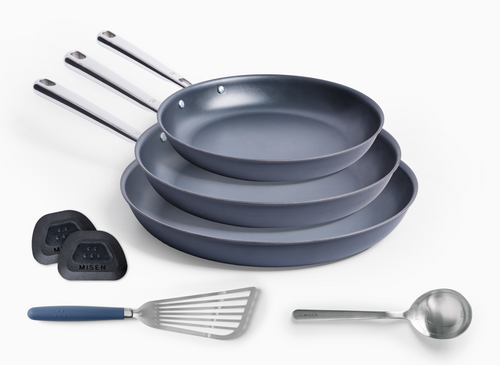
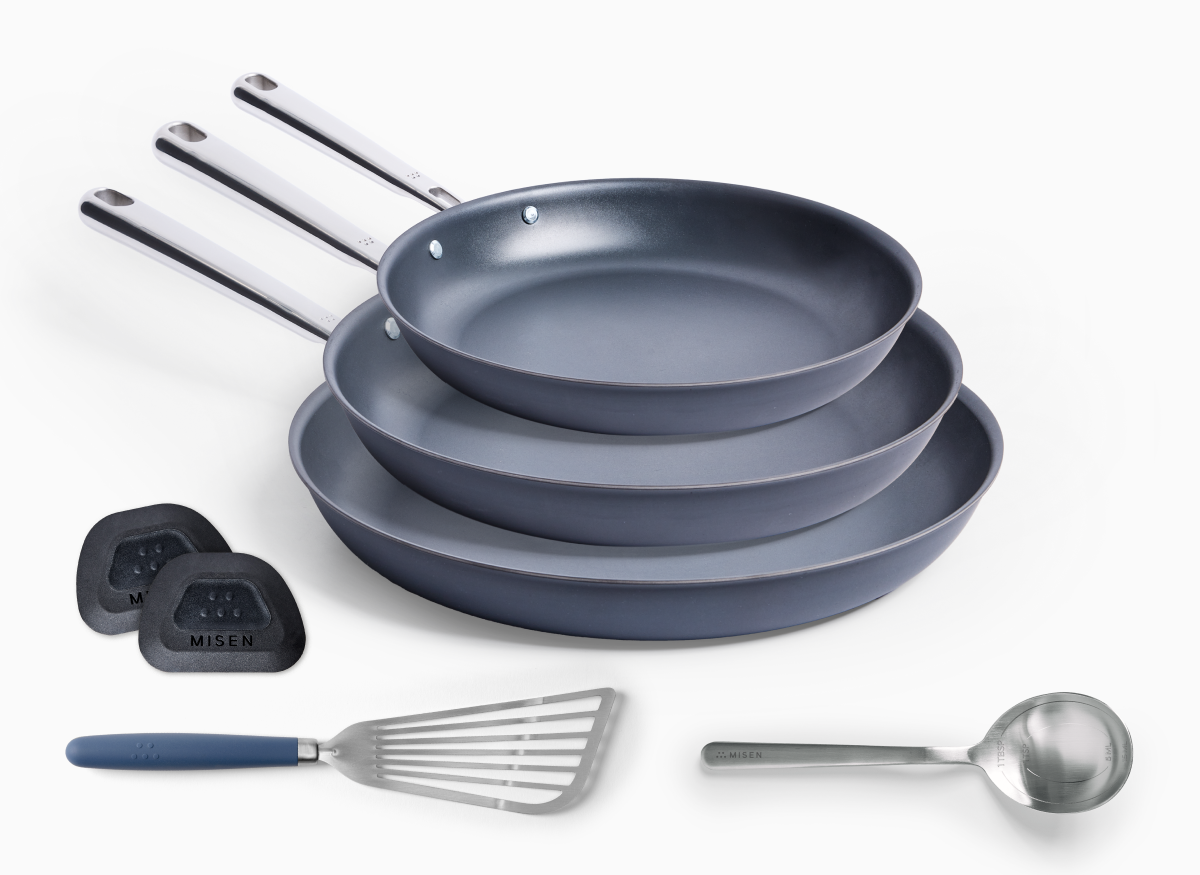
Two minutes of gentle hand-washing, medium heat, and silicone utensils can stretch your ceramic pan's life from two years to ten, saving you cash and keeping another hunk of landfill-bound metal out of the trash.
Understanding PFAS‑free cookware longevity
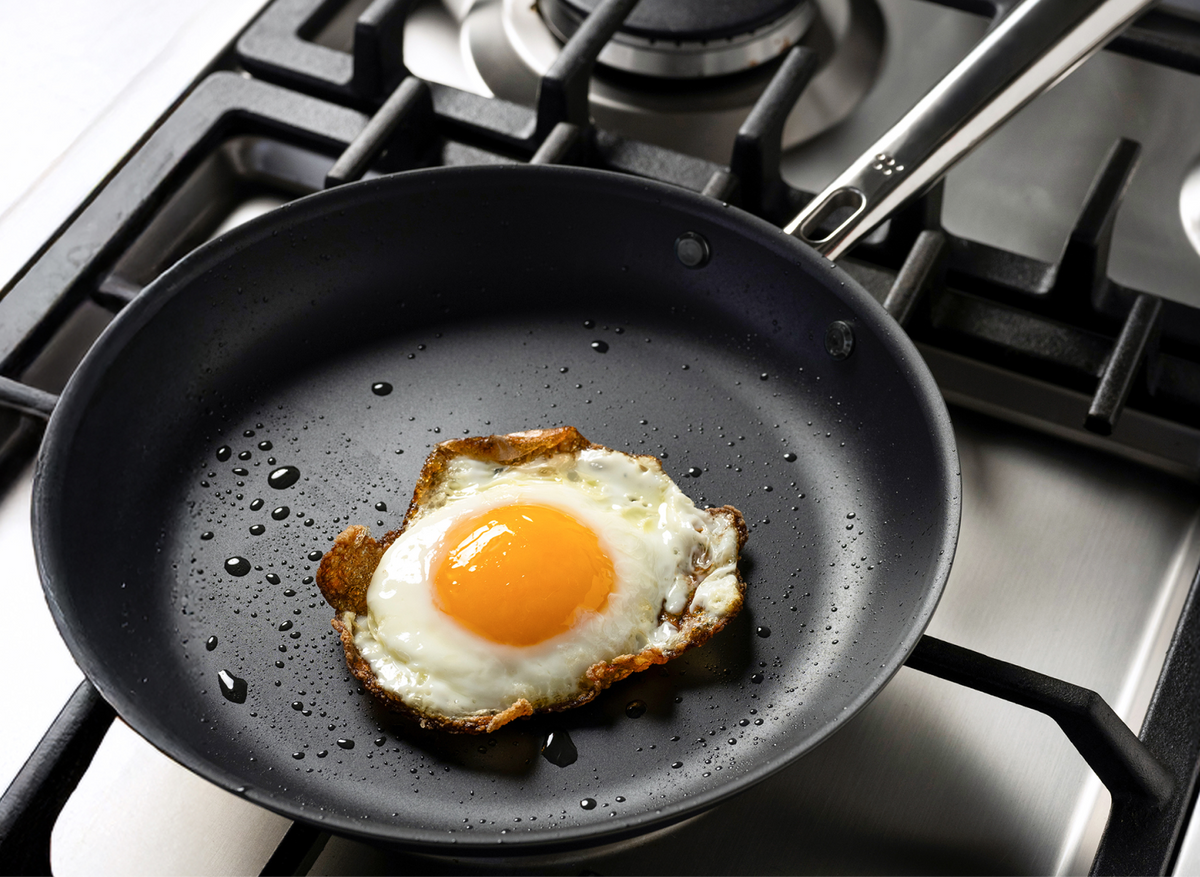
Choosing the right PFAS-free cookware starts with understanding how different materials perform over time. Ceramic nonstick pans--the most popular alternative to traditional Teflon--typically need replacing after just 1-3 years [2]. Their silica-based coating simply can't handle high heat, metal utensils, or dishwasher cleaning without breaking down [2]. Traditional materials tell a different story.
Cast iron pans can serve multiple generations when properly maintained, thanks to their solid one-piece construction [3]. Stainless steel offers similar longevity--it'll outlast you with basic care, though you'll need to master the technique for preventing sticking [1]. Carbon steel pans split the difference, developing a natural nonstick surface that actually improves with use [2].
The bottom line? While ceramic nonstick prioritizes convenience, traditional materials like cast iron, carbon steel, and stainless steel deliver better value through decades of reliable performance [3].
How daily care adds years to performance
Daily habits make the difference between replacing your pans every year or keeping them for a decade. Take ceramic nonstick--with proper care, you can stretch their typical 1-3 year lifespan to 5-10 years [4]. The secret isn't complicated.
Hand-wash your pans instead of using the dishwasher, which rapidly breaks down ceramic coatings [5]. Keep temperatures at medium or below--high heat destroys the nonstick surface faster than any other mistake [5]. Choose silicone or wooden utensils over metal ones to avoid those tiny scratches that eventually make everything stick [6].
And when storing, place something soft between stacked pans to prevent surface damage [5]. Think of it this way: two minutes of proper care after each use saves you from buying new cookware every couple years. That's real money in your pocket and fewer pans in the landfill--all from simple habits anyone can master.
The Two‑Minute Daily Habit: Step‑by‑Step Guide
Spend two cool-down minutes wiping, gently washing, and thoroughly drying (or lightly re-oiling) your pan and you'll dodge warping, scratches, and rust while building a natural, ever-improving non-stick surface.
Quick cleaning technique that protects the surface
Let your pan cool completely before cleaning--plunging hot cookware into cold water causes warping that ruins even the best pans [7]. Here's your quick cleaning routine: Start with a simple wipe using a paper towel to remove loose food particles [9]. Then hand wash using mild dish soap and a soft sponge. Skip the steel wool and abrasive cleaners--they'll scratch your pan's surface and shorten its life [8].
Got stubborn food stuck on? No problem. Add water to cover the residue, bring it to a gentle simmer for a minute or two, then use a wooden spoon to loosen everything up [9]. For really tough spots, try this trick: add 3-4 tablespoons each of white vinegar and baking soda to the simmering water before scraping [9].
Once clean, always dry your pan thoroughly with a towel--water spots aren't just unsightly, they can actually affect your pan's performance over time [8]. This simple routine protects against the three biggest pan killers: burnt food residue, surface scratches from harsh cleaning, and moisture damage from improper drying [7].
Simple seasoning tip for everyday use
If you're cooking with cast iron or carbon steel, regular seasoning is your secret weapon for building a natural non-stick surface. (Ceramic pans don't need seasoning--just gentle cleaning. ) After washing and drying your pan completely, apply a thin layer of cooking oil--think sheen, not puddle [10]. Heat the pan on low for 2-3 minutes, just until the oil starts to shimmer, then wipe away any excess with a paper towel.
What's happening here? The oil molecules are bonding with the metal surface, creating a protective layer that gets stronger with every use [11]. Starting with a new pan? Give it a head start with a more thorough initial seasoning: coat with oil and pop it in a 200 degreesC oven for 10 minutes [11]. Pro tip: skip the olive oil for seasoning--its low smoke point makes it less effective.
Rice bran oil works great for this [11]. Over time, you'll notice your pan developing a beautiful dark patina. That's not just for looks--it's your pan's natural non-stick coating getting better with age [11]. Keep up this simple routine, and you're looking at cookware that'll outlast you [10].
Science‑Backed Benefits of Consistent PFAS‑Free Pan Care
Science-backed testing proves that simple daily care can triple your PFAS-free pan's lifespan, save you 70% on replacements, and build that natural non-stick patina that gets better with age--so your cast iron could outlive you while your ceramic pan lasts a decade instead of one to three years.
Reduced wear and rust: recent test insights
Testing shows that proper maintenance makes a real difference in how your PFAS-free cookware performs over time. When ceramic pans get scratched or damaged, they're more likely to release unwanted particles into your food compared to well-maintained ones [13]. For cast iron and carbon steel, daily care helps build up that coveted natural patina--the non-stick surface that gets better with age, not worse [11]. Here's what's actually happening: when you heat oil on these pans, the oil molecules bond with the metal to create a protective layer.
It's like giving your pan a shield against moisture and rust [11]. Carbon steel pans (like this pre-seasoned option) are especially responsive to this care--they're half the weight of cast iron but just as durable when you treat them right [11]. The difference proper care makes is dramatic.
Testing shows that well-seasoned cast iron stays rust-free for generations, while neglected pans can develop rust spots in just months [12]. Even ceramic nonstick pans benefit--using the right utensils and cleaning methods can triple their lifespan compared to rough handling [12].
Energy and cost savings from extended pan life
Let's talk dollars and sense. When you replace ceramic nonstick pans every 1-3 years at $30-$100+ each, those costs add up fast. But maintain them properly, and they'll last 5-10 years--that's 70% fewer trips to buy new cookware [14]. Traditional materials save even more. A quality stainless steel pan can easily last 25+ years with basic care. Cast iron?
That's the kind of cookware you pass down to your kids. Yes, they cost more upfront, but spread that cost over decades of use and they're actually the budget-friendly choice [15]. The environmental math is equally compelling. Every pan you don't throw away is one less in the landfill. And here's something to consider: recycling metal uses a fraction of the energy needed to make new cookware from scratch [16]. So maintaining what you have isn't just smart for your wallet--it's better for the planet too.
Here's a real-world comparison: A $150 stainless steel pan used for 25 years costs you $6 per year. Meanwhile, replacing a $40 nonstick pan every two years runs $20 annually--and you're stuck with inferior cooking performance [15]. Even if you're on a tight budget, just extending your pan's life from three to five years can save you over $100. That's the power of two minutes of daily care [14].
Integrating the Habit into Your Kitchen Routine
Transform your sink-side space into a pan-care command center--stocked with cleaners, seasoning oil, a timer, and a quick-reference card--so a two-minute post-cook wipe, cool-down trivet pause, and monthly droplet test become automatic rituals that keep every skillet safe, non-toxic, and flawlessly non-stick.
Practical reminders and tools for a hassle‑free habit
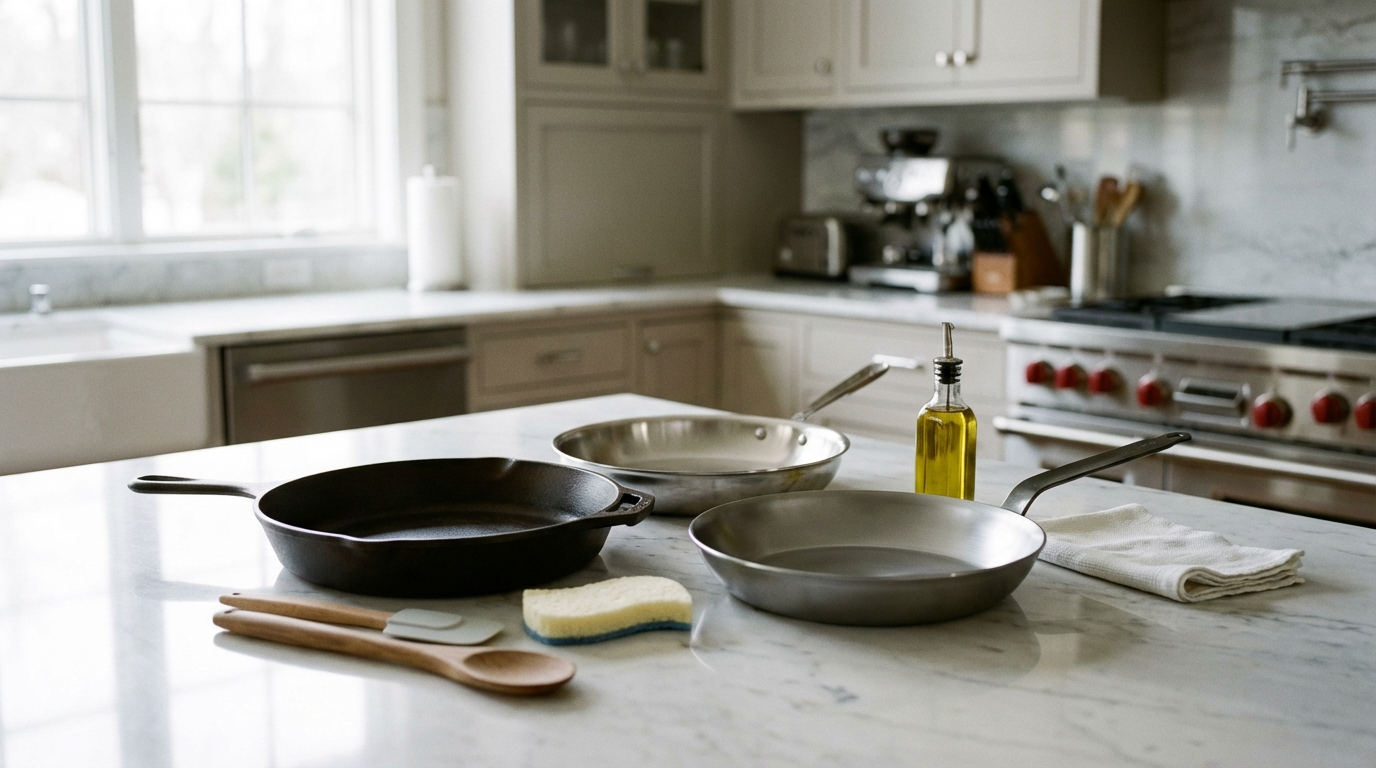
Set up a dedicated pan-care station within arm's reach of your sink with the essential tools discussed earlier--your chosen cleaning supplies and material-specific care items [17]. Visual reminders work wonders for building habits, so consider placing a simple care card near your stovetop with quick instructions for your specific pan type [17]. Many home cooks find that keeping a timer handy helps them stick to the two-minute routine without overthinking it [18].
Temperature management matters too--a heat-safe trivet next to your cooking area serves as a visual cue to let pans cool completely before cleaning, as covered in our cleaning technique section [17]. For cast iron or carbon steel pans, keep your seasoning supplies (high-smoke-point oil and lint-free cloth) right in your care station for those quick post-cleaning touch-ups [17]. Having everything organized and visible makes following through effortless--when the right tools are in the right place, good habits happen naturally [19].
A simple tracking method, like checking off days on a kitchen calendar, helps you see your progress and stay motivated to maintain this valuable routine [19].
Tracking progress and knowing when to re‑season
Regular visual inspection helps you catch issues before they impact your cooking or health. For ceramic-coated pans, watch for the warning signs we discussed in the longevity section--scratches, chips, or foods starting to stick more than usual [20]. Research confirms that damaged nonstick surfaces can release unwanted compounds, making timely replacement essential for safety [20].
With cast iron or carbon steel, the signs are different but equally clear: uneven coloration, sticky spots, or dull areas in the patina all signal it's time for a thorough re-seasoning [21]. Set up a simple maintenance schedule--monthly quick checks and quarterly deep seasonings for traditional cookware keep everything performing at its best [21]. The water droplet test makes checking seasoning quality easy: heat your pan gently and sprinkle a few water drops on the surface.
Well-seasoned pans make the water bead up and dance, while poorly seasoned surfaces cause immediate evaporation [21]. Trust your senses too--if ceramic cookware develops a metallic taste with acidic foods, that's a clear sign the coating has deteriorated beyond safe use [21]. When you spot any coating separation or deep damage, it's time to replace the pan, even if it still seems functional--your health is worth more than squeezing extra months from compromised cookware [22].
Key Takeaways
- Hand-wash ceramic pans and avoid high heat to stretch lifespan from 1-3 to 5-10 years.
- Cast iron, carbon steel, stainless steel last decades with daily 2-minute care.
- Season cast/carbon steel after each wash: heat thin oil film until it shimmers.
- Let pans cool before washing; simmer water + vinegar for stuck food removal.
- Damaged ceramic coatings can leach particles; replace when scratches or sticking appear.
- Well-maintained stainless costs $6/year vs $20/year replacing cheap nonstick every 2 years.
- Water-bead test on hot metal shows seasoning quality; immediate evaporation means re-season.
References
- https://www.cnet.com/home/kitchen-and-household/best-nontoxic-cookware/
- https://www.bonappetit.com/story/the-best-nontoxic-cookware-tested-by-our-experts?srsltid=AfmBOooQRTgKvY8LQVfdd98tS5ho44iZKONBKGKZPLEFs8r-TtUEmbWv
- https://globalreachceramic.com/blog_details/ceramic-cookware-vs-cast-iron
- https://www.leafscore.com/eco-friendly-kitchen-products/cookware/most-non-stick-pans-dont-last-very-long-heres-what-to-do-about-it/
- https://ceramics.org/ceramic-tech-today/ceramic-coated-cookware-safety/
- https://xtrema.com/blogs/blog/signs-it-is-time-to-replace-your-ceramic-coated-pans?srsltid=AfmBOoqHReAjgH2ITCxqa8xB01xastAYkZU-f248cTEvxWEBXekcBMim
- https://www.consumerreports.org/home-garden/cookware/make-your-nonstick-frying-pan-last-a1106078664/
- https://food52.com/story/25458-how-to-care-for-nonstick-pans
- https://americankitchen.com/blogs/table-talk/how-to-clean-nonstick-cookware?srsltid=AfmBOoqu8xuLYwFCwRXT_NWQ23FzJNbVrWUn-YA1EMFWRJRxG3z-ba2e
- https://cookinglife.eu/pages/how-to/pannen-zonder-teflon-en-pfas
- https://www.theguardian.com/thefilter/2025/feb/28/best-pfas-free-frying-pans
- https://www.seriouseats.com/best-non-toxic-cookware-7553352
- https://www.consumernotice.org/environmental/water-contamination/pfas/cookware/
- https://www.consumerreports.org/home-garden/cookware/best-frying-pans-if-you-want-to-avoid-pfas-chemicals-a1006253549/
- https://www.organicauthority.com/organic-food-recipes/non-toxic-cookware-brands-to-keep-chemicals-out-of-your-food
- https://letsgogreen.com/blog/non-toxic-cookware/
- https://www.everythingkitchens.com/blog/pfas-free-cooking-guide--how-to-cook-non-stick-with-stainless-steel-cast-iron-and-ceramic-nonstick-cookware.html?srsltid=AfmBOopVepejIJvb_vuDM6yesg-TH4psoWWHz4FMChryfmQZuuz18nTN
- https://food52.com/pages/a-greener-kitchen
- https://www.ruanliving.com/blog/kitchen-detox-checklist-nontoxic-cooking-storage-tips
- https://www.wpbf.com/article/florida-nonstick-pan-safe-consumer-reports-pfas/70043014
- https://www.solamexhome.com/the-non-toxic-cookware-reality-check-verify-your-pans-in-4-steps.html
- https://www.consumerreports.org/toxic-chemicals-substances/you-cant-always-trust-claims-on-non-toxic-cookware-a4849321487/