The Ultimate Buying Guide to the Best Carbon Steel Pan
About Misen
We make kitchen tools that work better, last longer, and cost less than you’d expect: everyday innovations with a radical focus on our customers’ actual need.
Table of Contents
Summary
Carbon steel pans deliver the perfect blend of cast-iron searing power and stainless-steel responsiveness in a lighter, faster-heating package that works on any heat source and can last 40-plus years with simple care. This guide walks you through everything you need to know—from the science behind seasoning that creates a naturally non-stick, chemical-free surface to choosing the ideal weight, handle style, and pre-seasoned versus bare metal for your cooking style—so you can confidently pick the best pan, keep it rust-free and slick, and master high-heat techniques like steakhouse sears, wok-style stir-fries, and oven roasts. You’ll learn how forged or rolled construction affects heat distribution, why French sloped sides excel at tossing while straight farmhouse walls maximize surface area, and how budget models under $50 can perform alongside heirloom artisan skillets. By comparing carbon steel to cast iron, stainless, non-stick, and ceramic, the article shows why pros prize its quick temperature control and longevity, then details daily cleaning, storage, and re-seasoning tricks that turn a fragile grey pan into a jet-black kitchen workhorse. Whether you want an all-purpose 10-inch Misen or OXO, a specialized paella pan, or a lightweight restaurant-grade flipper, you’ll finish knowing exactly which carbon steel skillet will reward you with decades of better sears, safer cooking, and meals that taste like they came from a Michelin-star kitchen.
Understanding Carbon Steel: The Perfect Pan Material
Carbon steel pans deliver cast-iron-level searing in a lighter, faster-heating package that, once seasoned, turns almost any food—from delicate eggs to flaky fish—into a naturally non-stick masterpiece.
What Exactly Is Carbon Steel? Composition and Properties
Carbon steel is an alloy containing less than 2% carbon with iron [1]. This specific composition creates a middle ground between cast iron (2-3. 5% carbon) and stainless steel (1. 2% carbon plus chromium) [1].
Carbon steel pans are created from stamped sheets of metal, resulting in a thinner, lighter design with sloped sides [2]. The material has a matte finish and offers exceptional heat properties—heating more quickly and evenly than cast iron with fewer hot spots, while still reaching temperatures high enough for perfect searing [1]. When seasoned (a process that bonds oil to the surface), carbon steel develops natural non-stick properties that excel with typically problematic foods like eggs, omelets, and fish [1]. The smoother surface combined with proper seasoning creates an impressively slippery cooking surface [1].
Carbon steel is harder than stainless steel, making it durable but also susceptible to rust and corrosion [1]. Like cast iron, it reacts with acidic foods, which can strip seasoning and affect flavor [1]. However, its combination of heat responsiveness, lighter weight, and natural non-stick qualities makes it increasingly popular with both home cooks and professionals [1].
The Manufacturing Process Behind Quality Carbon Steel Pans
Most carbon steel pans begin as metal sheets that undergo specific forming processes to create the final cookware. Unlike cast iron, carbon steel is shaped through controlled pressure rather than by pouring molten metal into molds [5]. The primary manufacturing methods include forging, rolling, and cold drawing—each affecting how your pan performs in the kitchen [5]. In forging, heated metal is shaped under a press with controlled force and speed, which enhances strength and hardness while improving corrosion resistance [5]. This process creates a tighter grain structure that helps your pan distribute heat evenly and last for years.
Rolling, another common technique, applies pressure to metal as it passes through rollers, creating the precise thickness that determines how quickly your pan heats up [5]. The best carbon steel pans often combine hot rolling for initial shaping with cold rolling for the final dimensions, giving manufacturers better control over consistency [5]. Why does manufacturing matter for your cooking? It directly impacts performance. Forged cookware offers greater strength and more predictable heating patterns than cast options [4].
However, forging has its limits—these pans may have simpler designs and require additional finishing work [4]. The thickness achieved during rolling is crucial: it determines whether your pan heats quickly and evenly or develops those frustrating hot spots that burn your food [5]. Finding the right balance between weight and heat retention is what separates a good pan from a great one.
How Carbon Steel Develops Natural Non-Stick Properties
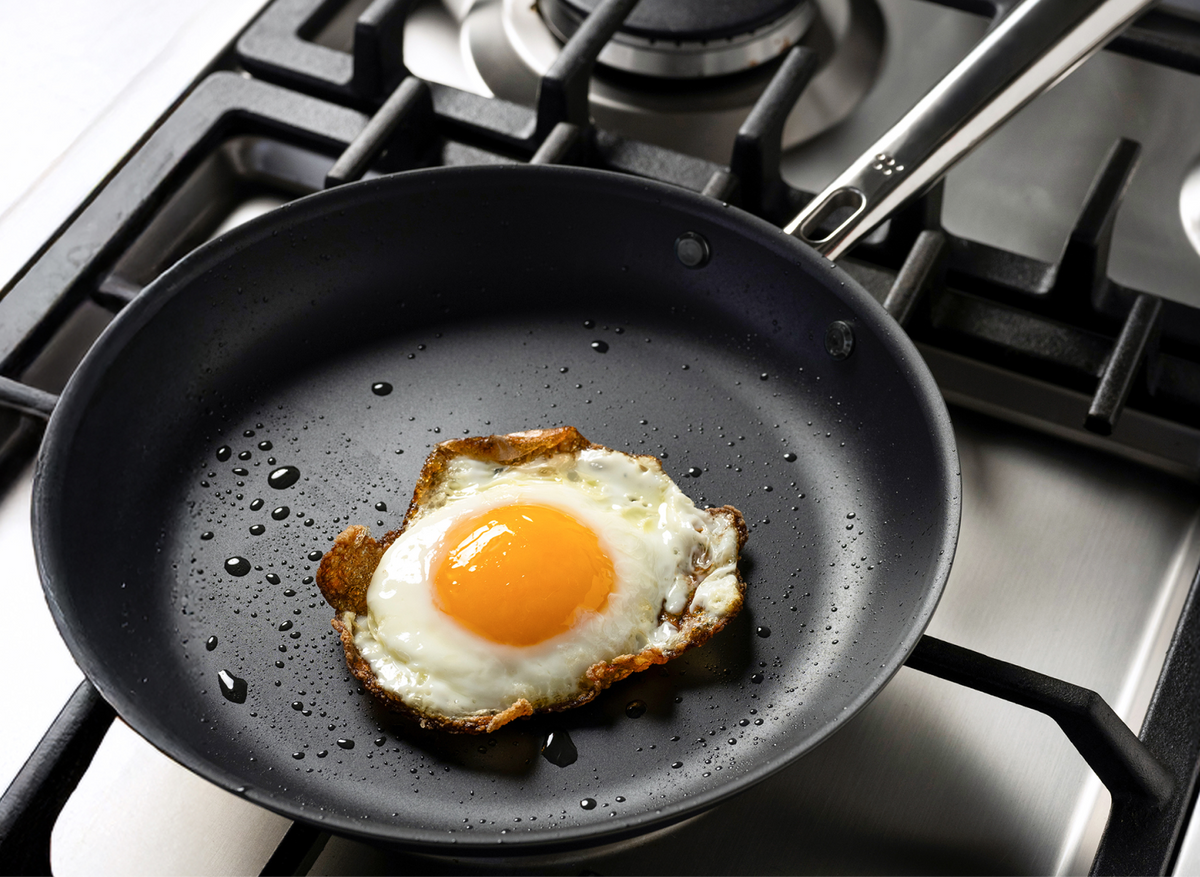
Contrary to popular belief, the "seasoning" that creates carbon steel's non-stick surface isn't flavor buildup from cooking. Rather, it's a scientific process where heated oil transforms from liquid grease into solid, plastic-like polymers that bond to the metal [6]. This polymer coating serves dual purposes: preventing rust by creating a water barrier and developing a cooking surface that rivals synthetic non-stick coatings for slipperiness [6]. When properly seasoned, carbon steel excels at cooking notoriously sticky foods like eggs, pancakes, and crepes [6].
The non-stick development process begins with the initial seasoning but continues with every use. A newly seasoned pan typically starts with a brown, potentially blotchy appearance that won't immediately resemble the slick black surface of well-used cookware [7]. The transformation happens gradually—each cooking session deposits microscopic layers of polymerized oil, particularly when cooking fat-containing foods [6]. Professional cooks value this progressive improvement, as the pan becomes increasingly non-stick while developing unique cooking characteristics.
The quality of the non-stick surface depends on proper seasoning technique and maintenance. Applying oil in extremely thin layers is crucial—excess oil creates sticky residue rather than a smooth polymer coating [6]. With regular use and proper care, the patina evolves from brown to black, indicating a well-developed non-stick surface [6]. Unlike synthetic coatings that deteriorate over time, carbon steel's natural non-stick properties can be restored whenever needed by re-applying the seasoning process [7].
Comparing Different Types of Carbon Steel Used in Cookware
Carbon steel cookware, composed of approximately 99% iron and 1% carbon, appears in several distinct variants that impact cooking performance [9]. The most significant distinction is between traditional unseasoned, pre-seasoned, and blue carbon steel pans. Blue carbon steel undergoes heat treatment to create a corrosion-resistant oxidized surface layer that prevents rust while turning the surface blue [8]. This treatment effectively jump-starts the seasoning process, though additional seasoning remains necessary for optimal nonstick properties [8]. Pre-seasoned carbon steel pans come with factory-applied oil layers that have been polymerized through heating, making them immediately ready for cooking without the initial seasoning step [8].
These pans typically develop better nonstick properties straight out of the box compared to unseasoned options [10]. For cooks who want to skip the initial seasoning process, a Manufacturing methods significantly impact pan quality and performance characteristics. Factory-made pans typically undergo stamping or spinning from metal sheets, creating thinner, more responsive cookware [8]. The metal may be cut to size, placed on a magnetic plate, then pressed and spun on a mold before finishing by hand and having handles welded on [8]. By contrast, handcrafted carbon steel pans, often made by skilled blacksmiths, tend to feature more careful construction and finishing, resulting in smoother cooking surfaces and often superior heat distribution [8].
The thickness of carbon steel pans varies significantly between manufacturers - thicker, heavier pans (around 3-4 pounds) retain heat better but respond more slowly to temperature changes, while lightweight options (under 3 pounds) heat quickly and allow for easier one-handed manipulation when sautéing or flipping food [10]. Beyond these primary categories, carbon steel pans vary in handle design, pan shape, and rim angle. French-style carbon steel pans feature high, sloped sides optimal for tossing ingredients [10], while farmhouse-style pans have straighter sides resembling cast iron skillets, making them more versatile for baking and roasting [10]. Both professionals and home cooks often prefer a middle ground between extremely lightweight restaurant-grade pans (which heat rapidly but can develop hot spots) and heavier artisan options that distribute heat more evenly [8]. When selecting carbon steel cookware, the ideal balance depends on your cooking style—if you're focused on serious searing, thicker material serves you best, while quick sautéing and tossing techniques work better with responsive, lighter-weight options [8].
Key Benefits of Investing in a Carbon Steel Pan
A carbon-steel pan outperforms stainless and non-stick, survives decades of daily abuse on any heat source from campfire to induction, and only gets slicker as you crank it past 600 °C for the perfect stovetop-to-oven sear.
Superior Heat Retention and Conductivity for Perfect Searing
You'll love how carbon steel pans transform your high-heat cooking.
They heat up faster than stainless steel and distribute heat more evenly than non-stick pans, eliminating those frustrating hot spots that ruin your sear [11].
Versatility Across Cooking Methods and Heat Sources
Your carbon steel pan works everywhere—gas, electric, induction, ceramic cooktops, ovens, grills, even over a campfire [13]. On gas stoves, you'll notice instant response when you adjust the flame. With induction, it heats almost as fast while giving you precise temperature control. Electric and glass-top stoves take a bit more patience, but they still get the job done [14]. This versatility opens up so many cooking techniques.
You can sear at incredibly high temperatures (up to 650°C! ), sauté delicate vegetables, stir-fry like a pro, or roast to perfection [9]. Those sloped sides? They're perfect for tossing ingredients or using your pan like a wok [13]. Here's what we love most: you can start cooking on the stovetop and move straight to the oven without missing a beat.
Or take it outside to the grill for that extra smoky flavor [9]. Just remember to heat your pan gradually and never shock it with cold water when it's hot—that's how warping happens [9]. Professional chefs have known this secret for decades. Carbon steel gives you the quick heating of aluminum with better temperature control than cast iron, since it cools down fast when you need it to [9].
Exceptional Durability and Value Over Time
Let's talk longevity. A well-cared-for carbon steel pan isn't just a purchase—it's an investment that can last generations. Unlike non-stick pans that need replacing every few years, carbon steel actually improves with age and use. The more you cook with it, the better that natural non-stick surface becomes. Think about the value here.
While you might spend a bit more upfront than on a basic non-stick pan, you're getting cookware that could easily last 40+ years with proper care. That's decades of perfect sears, crispy-skin fish, and restaurant-quality stir-fries. Compare that to buying new non-stick pans every 2-3 years, and the math becomes clear. What's more, carbon steel is incredibly forgiving. Scratched it with metal utensils?
No problem—just keep cooking and the seasoning fills in naturally. Accidentally let it rust? A quick re-seasoning brings it back to life. Try that with a damaged non-stick pan! This resilience means your investment is protected even if you're still learning the ropes of carbon steel care.
Health and Safety: A Natural Alternative to Synthetic Coatings
As we covered earlier, carbon steel is simply 99% iron and 1% carbon—no synthetic chemicals, no mysterious coatings [15]. This matters more than ever as concerns grow about PFAS "forever chemicals" in traditional non-stick cookware [16]. Your carbon steel pan develops its non-stick surface naturally through seasoning, where oil polymerizes to create a slick cooking surface. No chemicals involved—just oil and heat [16].
Even better? If you scratch your pan (we've all been there), you're not exposing your food to synthetic materials. Those scratches simply fill in as you continue cooking and building up the seasoning [15]. While you'll want to avoid long-simmering acidic foods that can strip seasoning, normal cooking poses zero health risks [16].
Carbon steel has been the choice of professional European kitchens for centuries—long before anyone worried about chemical coatings. That's a track record synthetic non-stick pans can't match [15]. For anyone looking to reduce their exposure to synthetic chemicals without sacrificing cooking performance, carbon steel delivers. It's cookware that gets better with time, not worse—protecting both your health and your investment [16].
Carbon Steel vs. Other Popular Cookware Materials
Carbon steel gives you cast-iron’s searing power at half the weight, heating fast and cooling on command so you can sauté, flip, and finesse dishes that cast iron’s slow, steady bulk simply can’t.
Carbon Steel vs. Cast Iron: Weight, Responsiveness, and Versatility
You've probably wondered whether you really need both cast iron and carbon steel in your kitchen. Here's what makes them different: cast iron contains 3% carbon while carbon steel contains up to 2% [17]. This small difference creates big changes in how they cook. Let's talk weight first. Carbon steel pans are noticeably lighter because they're stamped from thin steel sheets, while cast iron is poured thick into molds [17]. This means you can actually flip vegetables or slide an omelet with carbon steel—try that one-handed with a cast iron skillet and your wrist will remind you why it's not ideal [17].
The real game-changer is how these pans respond to heat. Cast iron is like that friend who takes forever to get ready but stays out all night—it heats slowly but holds that heat incredibly well [17]. Perfect when you want a consistent sear on your steak or need steady frying temperatures. Carbon steel is more like your responsive sports car—it heats up fast and cools down quickly when you need it to [17]. Professional chefs love this instant feedback, especially when they're juggling multiple dishes that need precise temperature control [18]. So which fits your cooking style better?
If you're into baking cornbread, deep frying, or dishes that benefit from long, steady heat, cast iron shines [17]. But if you want something more versatile that can handle everything from quick sautés to temperature-sensitive cooking, carbon steel's your best friend [18]. Both develop that coveted non-stick surface through seasoning, though carbon steel's smoother finish often makes this process easier [17]. For most home cooks who want one pan that does it all, carbon steel wins—it's lighter on your wrists and your energy bill [17].
Carbon Steel vs. Stainless Steel: Cooking Performance and Maintenance
Carbon steel and stainless steel pans deliver markedly different cooking experiences despite their similar appearance. Stainless steel pans distribute heat more evenly than carbon steel, particularly those with fully-clad construction featuring aluminum or copper core layers [11]. This construction eliminates hot spots and provides consistent cooking temperatures across the entire surface. Carbon steel responds quickly to temperature changes due to its thinner design, but stainless steel with copper cores offers superior temperature responsiveness [19]. Heat tolerance represents a significant difference between these materials. Carbon steel withstands dramatically higher temperatures—some models handling up to 1200°F compared to stainless steel's typical 500-600°F limit [19]. This makes carbon steel ideal for high-temperature searing and cooking methods that demand extreme heat.
Both materials retain heat well, though 5-ply stainless steel pans outperform 3-ply versions in heat retention [19]. The cooking versatility of these materials diverges in crucial ways. Stainless steel excels with acidic foods like tomato sauces and wine reductions because its non-reactive surface prevents metallic taste transfer [11]. Carbon steel pans cannot handle prolonged exposure to acidic ingredients as they strip the seasoning layer, compromising the cooking surface [19]. Similarly, simmering or boiling liquids in carbon steel degrades the seasoning, making stainless steel the better choice for liquid-based cooking techniques [19]. Carbon steel's near non-stick properties make it superior for cooking eggs, fish, and other delicate foods that typically adhere to stainless steel surfaces [11]. Maintenance requirements differ substantially between these materials.
Carbon steel demands regular seasoning—a process of applying oil and heating the pan to create a protective polymer layer [11]. This seasoning process prevents rust and creates the pan's non-stick properties but requires ongoing attention [11]. Stainless steel requires no seasoning and resists corrosion naturally due to its chromium content [19]. While carbon steel cannot be cleaned in dishwashers as detergents strip its seasoning, stainless steel withstands dishwasher cleaning, though hand washing is still recommended for longevity [11]. The cleaning experience reverses expectations—despite more maintenance requirements, seasoned carbon steel releases food more easily during cleaning, while food tends to stick stubbornly to stainless steel surfaces [19].
Carbon Steel vs. Traditional Non-Stick: Longevity and Performance
Let's be honest—we've all been tempted by those shiny non-stick pans that promise effortless cooking. But here's the thing: while traditional non-stick pans give you maybe 3-5 good years, a carbon steel pan can be your kitchen companion for 40+ years [20]. That's not a typo—some cooks are still using their grandparents' carbon steel pans today. The secret? Carbon steel creates its non-stick surface naturally through seasoning (basically baked-on oil), not synthetic PFAS chemicals that chip and flake over time [20]. And unlike traditional non-stick that starts degrading from day one, carbon steel actually gets better with age—each time you cook, you're building up that slick, naturally non-stick surface [20].
Performance-wise, carbon steel plays in a completely different league. Want to get that restaurant-quality sear on your steak? Carbon steel can handle the blazing heat. Traditional non-stick pans? They'll release potentially toxic fumes if you crank them too high [20]. With carbon steel, you can go from gently frying eggs to scorching hot stir-fries without a second thought about safety.
Sure, traditional non-stick feels lighter in your hand and works straight from the store. But when that coating inevitably scratches, it's game over. Scratch your carbon steel? Just re-season it—sometimes a good bacon cook is all it takes [20]. The math is simple: buy one carbon steel pan that lasts decades, or keep replacing non-stick pans every few years. For those who want immediate gratification, pre-seasoned options available on the market today offer excellent performance right out of the box.
Carbon Steel vs. Ceramic: Comparing Two Non-Toxic Options
Carbon steel and ceramic cookware represent two excellent non-toxic alternatives to traditional non-stick pans. Carbon steel contains approximately 99% iron and 1% carbon with no harmful chemicals [21]. When properly seasoned, it forms a naturally non-stick polymerized oil layer that prevents food from sticking without synthetic coatings. Ceramic cookware comes in two forms: fully ceramic and ceramic-coated. Pure ceramic cookware is handcrafted from clay and ceramic materials, offering a non-scratch surface that resists minor damage [21].
Ceramic-coated options typically feature an aluminum or stainless steel base covered with an inorganic ceramic layer free from PTFE (Teflon) and PFOA [21]. Both materials excel in different cooking scenarios. Carbon steel heats quickly and develops a seasoning that improves with use, though cooking acidic foods can strip this protective layer [21]. Ceramic retains heat exceptionally well—taking longer to heat up but maintaining temperature longer, making it ideal for serving food directly from stove to table [21]. Maintenance requirements differ significantly between these materials.
Carbon steel demands regular seasoning and immediate drying to prevent rust, while ceramic requires careful handling to avoid thermal shock that could cause cracking [21]. For longevity, carbon steel pans can last decades with proper care, while ceramic cookware can potentially last a lifetime if protected from impacts and sudden temperature changes [21]. Both options provide excellent non-toxic cooking surfaces, with your choice ultimately depending on cooking style—carbon steel for high-heat techniques requiring responsive temperature control, ceramic for consistent heat retention and completely non-reactive cooking.
Essential Features to Consider When Choosing the Best Carbon Steel Pan
Pick a carbon-steel pan in the 2.6–3.3 lb sweet spot: thick enough for steak-searing heat retention yet light enough to flip veggies without a gym workout.
Thickness and Weight: Finding the Perfect Balance
Let's talk about finding your perfect pan weight—because nobody wants to feel like they're doing bicep curls while making dinner. The thickness of your carbon steel pan (typically ranging from 2-3mm) directly affects both cooking performance and how comfortable it feels in your hand [8]. Here's what you need to know: thicker pans distribute heat more evenly and hold onto it longer, which is exactly what you want for getting that perfect sear on steaks [8]. But there's a trade-off—more thickness means more weight, and that can make a difference when you're trying to flip vegetables or maneuver your pan with one hand. Most carbon steel pans weigh between 2. 6 and 5. 2 pounds.
Professional chefs tend to gravitate toward the lighter options, and for good reason [10]. Pans under 3 pounds heat up quickly and respond instantly when you adjust the temperature—perfect for delicate fish fillets that need precise heat control [8]. They're also much easier to handle when you're sautéing or doing that satisfying pan-flip motion [10]. On the flip side, heavier pans (over 3 pounds) excel at heat retention. They're your best friend for serious searing but can feel unwieldy during longer cooking sessions [10]. For most home cooks, the sweet spot falls between 2. 6 and 3.
3 pounds—heavy enough to hold heat well but light enough to handle comfortably [10]. The key is matching your pan to your cooking style. Love tossing vegetables and making quick stir-fries? Go lighter. Focused on achieving restaurant-quality sears? A bit more heft will serve you well. Remember, pans under three pounds and three ounces are generally the easiest to work with, even when they're full of food [10].
Handle Design: Ergonomics, Materials, and Heat Resistance
Your pan's handle might seem like a small detail, but trust me—it makes a huge difference in your cooking experience. Most carbon steel pans feature angled steel handles about an inch wide, but the subtle differences in design can transform how the pan feels in your hand [8]. First, let's talk comfort. Handles with rounded edges are your friends during those longer cooking sessions, while sharp-edged handles can leave your palm feeling sore [10]. The sweet spot for handle length?
Between seven and nine inches. Any shorter and your hand gets uncomfortably close to the heat; any longer and the pan becomes awkward to maneuver and store [10]. Handle materials each bring their own pros and cons: Traditional steel handles match the pan body for durability and can handle extreme oven temperatures (some up to 1200°F! ). The downside?
They get hot quickly during stovetop cooking [8]. Silicone-wrapped handles stay cool and comfortable during stovetop use—perfect for those extended sautéing sessions. Just remember to remove the sleeves if you're heading into the oven above 350°F [10].
Size and Shape: Matching the Pan to Your Cooking Style
Choosing the right size and shape isn't just about what fits on your stove—it's about matching your pan to how you actually cook. Here's something many people don't realize: a 10-inch pan with high, sloped sides might only give you 7 inches of actual cooking surface [13]. That missing space matters when you're trying to get a proper sear without overcrowding. Let's break down your options: French-style pans with their high, sloped sides are perfect if you love tossing ingredients. They're basically the sports cars of carbon steel—agile and responsive, making them excellent stand-ins for woks when stir-frying [20]. The sloped sides make it easy to flip vegetables or slide that perfect omelet onto a plate.
Farmhouse-style pans take a different approach with straighter sides that maximize your cooking surface. Think of them as the versatile SUVs—great for searing, but also ready for baking and roasting tasks [13]. If you frequently move dishes from stovetop to oven, these are your best bet. For sizing, a 10-inch pan handles most everyday cooking for 1-3 people beautifully. Need to feed a larger crew? A 12-inch pan offers more real estate but often benefits from a helper handle to manage the extra weight when full [13].
The key is thinking about your go-to recipes. Love making stir-fries and omelets? Those sloped sides will become your best friend. More into searing steaks and roasting chicken? Straighter sides give you maximum surface area for that perfect crust.
Pre-Seasoned vs. Unseasoned: Which Is Right for You?
Here's the million-dollar question: should you start with a pre-seasoned pan or season it yourself? Let me break down what really matters for your cooking. Pre-seasoned pans arrive with factory-applied oil layers that have already been transformed into that slick, nonstick surface through heat treatment [23]. Think of it as getting a head start—you can literally cook eggs or potstickers right out of the box without the dreaded sticking [25]. For anyone who wants to dive straight into cooking without the prep work, pre-seasoned is the way to go. Unseasoned pans come with a protective coating (usually beeswax) that prevents rust during shipping.
You'll need to remove this and build your seasoning from scratch [24]. Yes, it takes more effort upfront, but here's the thing—you get complete control over creating your perfect cooking surface. Some experienced cooks swear by this method, believing they can achieve better results than any factory seasoning [24]. Here's what you should know: carbon steel seasons faster than cast iron because it's less porous, but it can also lose its seasoning more quickly. Professional chefs sometimes re-season their pans multiple times in a single shift [24]. Don't let that scare you though—with regular home use, you won't need to season nearly that often.
As discussed in our earlier section on natural non-stick properties, the seasoning process is really about building up those polymerized oil layers. Whether you start with pre-seasoned or unseasoned, you'll be adding to and maintaining this coating over time. My take? If you're new to carbon steel or want immediate gratification, go pre-seasoned. If you enjoy the process and want that personalized touch, unseasoned gives you that control. Either way, you'll end up with an excellent cooking surface—it's just a matter of how you want to get there.
Top Carbon Steel Pan Recommendations for Different Needs
From Misen’s family-friendly workhorse and OXO’s feather-light bargain to Mauviel’s French classic and a hand-forged Oregon beauty, these pre-seasoned carbon steel pans give you pro-level searing and true nonstick release without the teflon—no matter your budget or kitchen style.
Best Overall Carbon Steel Pans for Home Cooks
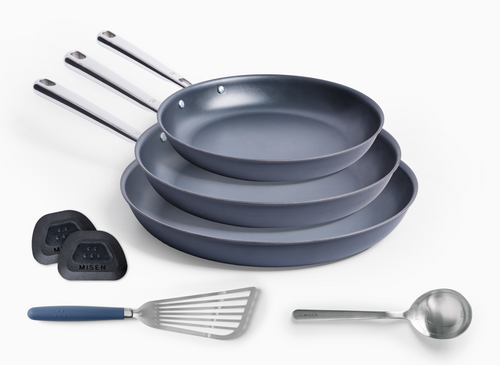
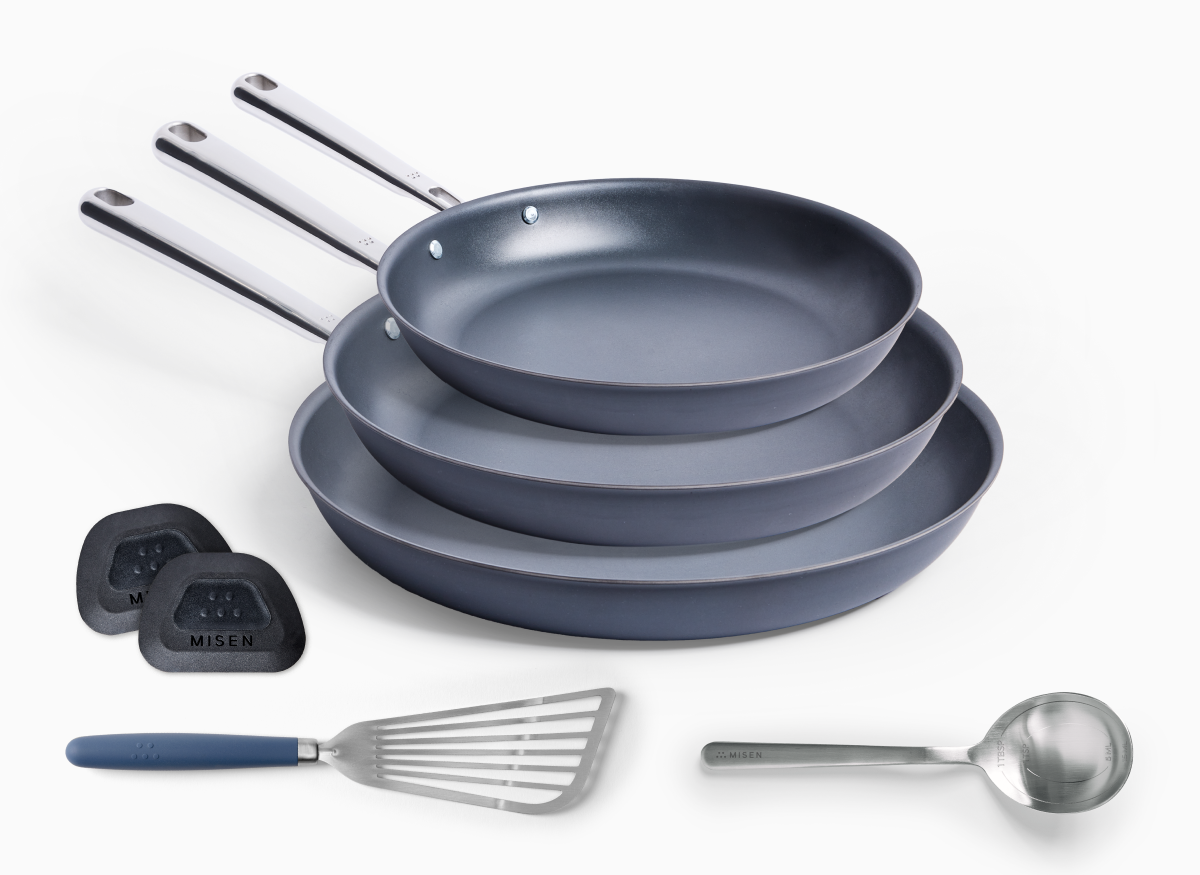
Misen's pre-seasoned carbon steel pan stands out as an exceptional all-around choice, delivering impressive nonstick performance right from the box. During extensive testing, it effortlessly handled everything from fried eggs to seared chicken, with food sliding easily off its cooking surface [10]. Despite its 10-inch diameter, it offers the largest effective cooking surface among top performers, making it practical for families without requiring excessive storage space [10]. The silicone-sleeved handle keeps your grip comfortable and cool during stovetop cooking, though you'll need to remove it for oven use above 350°F [10]. The OXO Obsidian pre-seasoned carbon steel pan delivers extraordinary nonstick performance at a more accessible price point.
Testers found its surface rivaled even dedicated nonstick pans while weighing just 2. 6 pounds—making it exceptionally maneuverable for techniques requiring pan movement [10]. Its ergonomic handle with removable silicone cover maintains comfort during extended cooking sessions, while its impressive heat distribution ensures consistent results [10]. For budget-conscious cooks, the Merten & Storck pre-seasoned pan offers remarkable value under $50 while still delivering excellent nonstick properties immediately upon unpacking [10]. For traditional carbon steel enthusiasts, Mauviel's M'STEEL carbon steel pan represents the gold standard with its sturdy construction and excellent heat distribution.
Though slightly heavier than ideal, its spacious cooking surface and nicely flaring sides create an ideal environment for both high-heat searing and delicate cooking [8]. The pan browns evenly and develops a reliable nonstick surface quickly after initial seasoning [8]. Those seeking artisanal quality should consider the Northwest Skillet Company's carbon steel pan, which arrives pre-seasoned with a deep blue patina. Hand-crafted in Oregon, it features a broad cooking surface, low flaring sides, and a comfortable handle angle that makes its substantial weight feel surprisingly manageable [8].
Professional-Grade Options for Serious Culinary Enthusiasts
Error processing section content.
Budget-Friendly Carbon Steel Pans That Don't Compromise Quality
Quality carbon steel pans don't require emptying your wallet. The Merten & Storck Pre-Seasoned 10-inch Carbon Steel Frying Pan offers remarkable value under $50 while delivering excellent nonstick properties immediately upon unpacking [10]. Its flawless, pre-seasoned coating performs reliably, and its balanced weight makes it manageable for one-handed techniques [10]. Though its flat handle gets warm during cooking, this minor drawback doesn't diminish its impressive price-to-performance ratio [26]. For slightly more investment, the OXO Obsidian carbon steel pan ($60) provides exceptional nonstick performance rivaling dedicated Teflon pans while weighing just 2.
6 pounds [10]. Its ergonomic silicone-sleeved handle maintains comfort during extended cooking sessions, and its lightweight design allows easy maneuvering with delicate foods [10]. Restaurant-quality cookware becomes accessible with the Vollrath 12. 5 Inch French Style pan ($56), which brings professional kitchen reliability to home cooks [10]. With high, sloped sides optimal for tossing ingredients, this traditional unseasoned pan will last a lifetime with proper care [10].
The Lodge 12 Inch Seasoned Carbon Steel Skillet ($45) offers another budget entry point with comfortable handling and factory pre-seasoning, though some testers noted its slick coating deteriorated with use, requiring additional seasoning maintenance [8]. For those willing to spend a bit more, the Paderno World Cuisine Heavy Duty Polished Carbon Steel Frying Pan ($63) offers generous cooking space with a low-angled handle, though its weight can make it challenging to maneuver [8]. Budget carbon steel pans typically economize through simpler designs and manufacturing processes while maintaining the essential heat properties that make carbon steel desirable.
Specialized Carbon Steel Pans for Specific Cooking Techniques
Carbon steel pans excel in specialized cooking applications, particularly paella—the vibrant Spanish rice dish traditionally cooked over wood fire in wide, shallow pans. The specialized design of paella pans focuses on maximizing surface area while maintaining exceptional heat responsiveness. As culinary director Daniel Gritzer explains, "The whole concept of paella, the ideal texture of rice, the ratio of crispy bottom to tender al dente grains... all of this is connected to the form and build of the pan" [27].
Carbon steel paella pans feature intentionally thin construction to provide rapid response to temperature changes, essential for achieving the coveted socarrat (crispy bottom layer). Traditional paella pans are deliberately shallow—typically no more than a finger's width deep when filled with rice—allowing even cooking and proper liquid circulation [27]. The Garcima Pata Negra Paella Pan stands out for stovetop and grill cooking with its 11-inch flat base that distributes heat evenly while developing perfect socarrat [27]. For budget-conscious cooks, the El Cid Paella Pan delivers excellent performance under $30, with slightly different dimensions that effectively circulate broth to prevent burning [27].
When using paella pans, expert Chef Teresa Montaño advises engaging all senses: "As the broth cooks down and concentrates into the rice, you can hear the rice start to crackle in the pan. Because there is a fine line between burning and achieving the crispy rice, you must use your nose to smell for burn as you are crisping the rice" [27]. Beyond paella, these wide, shallow carbon steel pans excel at other cooking techniques—from vegetable sautéing to protein searing—where their open surface area allows heat to escape without interfering with proper browning [27].
Mastering Carbon Steel Pan Care and Maintenance
Keep your carbon steel pan in peak condition by simply wiping it out after most uses, drying it on the stove to banish moisture, and re-seasoning only when acidic meals strip the finish—no soap or scrubbing required.
Proper Seasoning Techniques for a Perfect Non-Stick Surface
Error processing section content.
Daily Cleaning Methods That Preserve Your Pan's Patina
Let's keep your carbon steel pan performing beautifully with these simple daily cleaning tips. The best part? Less is often more. If nothing stuck during cooking, just wipe your pan with a damp paper towel and add a whisper-thin layer of oil—it'll season itself during your next cooking session [28]. Many home cooks love the deglazing method: while the pan's still warm, pour in hot water and gently scrape with a spatula to release any bits, then wipe dry [28]. For deeper cleaning, warm water and a soft sponge work wonders.
Skip the harsh dish soap—it can strip away that hard-earned seasoning you've been building [28]. Here's the golden rule: moisture is carbon steel's nemesis. After washing, pop your pan back on the stove for a minute or two to completely dry it out [29]. If you're storing your pan for more than a few days, a light oil coating provides extra protection, but daily users can skip this step [28]. Don't worry about those dark spots or streaks that develop over time—they're signs of a well-loved pan, not flaws [29]. If tomato sauce or wine damaged your seasoning (it happens!
), simply re-season rather than scrubbing aggressively [29]. Got stubborn buildup around the rim? Mix two parts salt with one part oil to create a gentle scrub. Apply it when your pan is hot enough to instantly evaporate water droplets—this natural exfoliant works like magic [29].
Storage Practices to Prevent Rust and Damage
Storing your carbon steel pan properly is surprisingly simple—and it makes all the difference in keeping your cookware ready for action. Start with the basics: make sure your pan is bone-dry before putting it away, especially if you live somewhere humid [30].
Think of oil as your pan's protective shield. Apply a thin coat to all surfaces (inside and out), then wipe away the excess so it doesn't feel greasy [31].
Troubleshooting Common Issues and Restoring Damaged Pans
Don't panic when your carbon steel pan shows signs of wear—every issue has a simple fix! Rust might look scary, but it's actually easy to handle. For light rust, make a paste with salt and oil to gently scrub it away. More stubborn rust? Steel wool does the trick, or try the potato method—the natural acids work wonders at dissolving those orange spots [32]. Keep a small scrubber (even an old toothbrush works great) dedicated to your carbon steel care kit.
It's perfect for tackling sticky spots without harming that beautiful patina you've built [33]. Did last night's marinara strip some seasoning? No worries—this happens to everyone. If rust is involved or acidic foods really did a number on your pan, use vinegar to strip everything down to bare metal, then re-season from scratch [33]. Sometimes pans get sticky from too much oil during seasoning (we've all been there). The fix is refreshingly simple: heat the pan until it smokes, wipe it clean, then apply the thinnest possible layer of high-smoke-point oil like grapeseed or soybean [32].
Warping usually comes from temperature shock—like plunging a hot pan into cold water. Once warped, it's tough to fix, so prevention is your best strategy [33]. Got scratches from overzealous spatula work? They're not just cosmetic—they create hiding spots for moisture and food particles, so a complete re-seasoning is your best bet [33]. Here's the most important thing to remember: that uneven, mottled coloration isn't a flaw—it's character! A well-used carbon steel pan develops a unique patina that tells the story of every meal you've cooked [32].
Key Takeaways
- Carbon steel pans heat faster than cast iron, weigh less, and reach searing temps with fewer hot spots.
- Seasoning transforms oil into plastic-like polymers, creating a natural non-stick surface that improves with use.
- Forged pans are strongest; rolled thickness (2–3 mm) balances fast heat and even distribution.
- Pre-seasoned pans cook eggs out of the box; unseasoned lets you build custom seasoning from scratch.
- Choose 2.6–3.3 lb pans for easy handling; heavier pans hold heat better for steak searing.
- Avoid acidic foods that strip seasoning; carbon steel can last 40+ years and be re-seasoned indefinitely.
- French-style sloped sides excel at tossing; farmhouse straight sides maximize surface for searing and baking.
References
- https://www.thespruceeats.com/carbon-steel-vs-cast-iron-pans-what-s-the-difference-4796603
- https://www.masterclass.com/articles/carbon-steel-vs-cast-iron-explained
- https://www.huaxia-steel.com/news/detailed-explanation-of-carbon-steel-forming-processes.html
- https://www.glforge.com/forging-vs-casting
- https://www.tlv.com/en-us/steam-info/steam-theory/other/casting-and-forging
- https://www.seriouseats.com/how-to-season-carbon-steel-pans
- https://www.americastestkitchen.com/articles/2279-how-to-season-carbon-steel-cookware
- https://www.americastestkitchen.com/equipment_reviews/2705-the-best-carbon-steel-skillets
- https://gastrotools.com/blogs/guides/carbon-steel-guide-questions-and-answers-faq
- https://www.seriouseats.com/best-carbon-steel-pans-7093873
- https://www.marquettecastings.com/blogs/blog-2/carbon-steel-vs-stainless-steel-pan
- https://chopchopusa.com/blogs/news/carbon-steel-vs-stainless-steel-pan
- https://www.epicurious.com/shopping/best-carbon-steel-skillets-article-article
- https://www.independentironware.com/blog/the-science-of-heat-how-carbon-steel-reacts-on-gas-electric-and-induction-stovetops?srsltid=AfmBOoqTO_4JEIKc1fT3UgzJBJ0EQ8apw_sh1nM3D7WieoAgOTv7dguc
- https://gastrotools.com/blogs/guides/are-carbon-steel-pans-safe-to-cook-on
- https://ireadlabelsforyou.com/is-carbon-steel-non-toxic/
- https://stahlkitchens.com/blogs/news/carbon-steel-vs-cast-iron?srsltid=AfmBOoq-ZzEYGlXtovvJsXthuXYSaIvOfm9a8WB0K053lHBbjwApoiDu
- https://cookdinehost.com/blogs/articles/cast-iron-vs-carbon-steel-which-should-you-choose?srsltid=AfmBOopa24S6DUDc-8ptMOx1zAl74icurDMTwdAuObHssF0DAeYXty-R
- https://prudentreviews.com/carbon-steel-vs-stainless-steel/
- https://www.nytimes.com/wirecutter/reviews/advice-pro-carbon-steel-pan/
- https://nephcure.org/safe-kitchen-choices-a-comprehensive-guide-to-non-toxic-cookware/
- https://www.thespruceeats.com/best-carbon-steel-pans-4768636
- https://howtomakedinner.com/blog/cooking-with-carbon-steel-pans/
- https://www.leafscore.com/eco-friendly-kitchen-products/pros-and-cons-of-carbon-steel-cookware/
- https://nymag.com/strategist/article/misen-preseasoned-carbon-steel-pan-review-2024.html
- https://www.foodandwine.com/lifestyle/kitchen/best-carbon-steel-pans
- https://www.seriouseats.com/best-paella-pans-8424588
- https://www.reddit.com/r/carbonsteel/comments/s1gwxm/how_do_you_clean_your_pan_on_a_daily_basis/
- https://www.thekitchn.com/if-your-carbon-steel-pan-looks-like-this-dont-freak-out-235288
- https://www.marquettecastings.com/blogs/blog-2/how-to-care-for-carbon-steel-pan
- https://hotwok.com/blogs/faq/how-to-store-your-wokpan-correctly-avoid-rust-and-discoloration
- https://www.marquettecastings.com/blogs/blog-2/how-to-season-carbon-steel-pans
- https://www.debuyer-usa.com/blogs/how-to/the-art-of-maintenance-how-to-clean-carbon-steel-pans?srsltid=AfmBOooYePAmxIpxgXeFVC8h9fEUe_oX4QeA1noB-Broa45-NYp2CvCO