Ultimate Guide to Kadai Chicken: Tips, Variations, and Recipes
Ultimate Guide to Kadai Chicken: Tips, Variations, and Recipes
About Misen
We make kitchen tools that work better, last longer, and cost less than you’d expect: everyday innovations with a radical focus on our customers’ actual need.
Table of Contents
Summary
This ultimate guide to kadai chicken equips home cooks to master Pakistan’s iconic wok-seared curry by demystifying every layer of its bold, smoky character—from the origins of the dish in Khyber Pakhtunkhwa’s cast-iron kadai to the precise dry-roast-and-grind technique for the signature kadai masala of coriander, fennel, and dried chilies. Readers learn why bone-in, uniformly cut chicken and high-heat searing develop deeper flavor than restaurant shortcuts, how to balance tangy tomatoes with optional onions and bell peppers, and which vessels—cast iron for authenticity or stainless steel for ease—deliver the coveted “wok hei” without steaming the meat. The article delivers a fail-safe step-by-step recipe, healthy swaps like paneer or mushroom for vegetarians, low-oil and breast-meat variations, plus pro tips for weeknight shortcuts, freezer-friendly batch cooking, and reheating tricks that restore just-cooked crunch. It also maps out complete meals: pillowy naan, smoky tandoori roti, fragrant ghee rice, cooling raitas, and vibrant vegetable sides that together turn the curry into a nutritionally balanced feast. Whether you crave the traditional North-Pakistani fire or a milder Punjabi buttery twist, this single resource shows how fresh spice grinding, controlled browning, and the right accompaniments elevate kadai chicken from take-out novelty to a confident, repeatable showpiece in any kitchen.
Understanding Kadai Chicken: Origins and Basics
Born in Pakistan’s Khyber Pakhtunkhwa mountains and seared in a blistering kadai, this tomato-chicken curry delivers bold, smoky flavor from freshly cracked coriander, fennel and chilies—no cream, no fuss, just sizzling meat and spice best scooped up with hot naan.
What Is Kadai Chicken?
Kadai Chicken (also called Karahi Chicken) is a flavorful dish from the Indian subcontinent that originated in Pakistan's mountainous Khyber Pakhtunkhwa province [2]. Named after the "kadai" - a thick, circular wok-like pot used in South Asian cooking - this dish features chicken cooked with tomatoes and a distinctive spice blend called kadai masala [1].
The masala typically combines coriander seeds, fennel seeds, dried red chilies, and black pepper, giving the dish its characteristic flavor [1]. Traditional versions rely on tomatoes, ginger and garlic without onions [2], while modern restaurant adaptations include onions and bell peppers for balanced flavor and texture [1].
Unlike creamy curries like butter chicken, kadai chicken has a textured sauce with bold, smoky flavors developed through the kadai's heat retention and wide cooking surface [3]. Typically served with naan, roti, or rice, this dish showcases the aromatic interplay of freshly ground spices with the tangy notes of tomato and optional crunch from vegetables [1][2].
Historical Roots and Regional Variations of Kadai Chicken
Kadai chicken traces its origins to Pakistan's mountainous Khyber Pakhtunkhwa province, formerly known as the North-West Frontier Province [2]. While some sources suggest connections to the Mughal era in India [4], the dish is firmly rooted in Pakistani Pashtun culinary traditions [2]. Originally prepared with game meat in the rugged regions of the Indian subcontinent, chicken became the preferred protein due to its widespread availability and shorter cooking time [5]. The dish's regional variations showcase its evolution across South Asia.
Pakistani versions typically feature a thick, spicy tomato-based sauce served with naan or roti [5]. In Punjab, cooks often add butter or cream for a richer flavor profile [5]. North Indian adaptations tend to be milder with more yogurt and reduced chili heat [5]. Cooking techniques also vary by region—some areas prefer a slow-cook method that develops deeper flavors, while others use quicker high-heat preparation [5].
As Pakistani and Indian communities migrated globally, kadai chicken gained international popularity and now appears on menus across the UK, US, Canada, and Middle East [5]. The dish maintains its distinctive character through traditional preparation methods while accommodating local taste preferences.
Key Ingredients That Define Kadai Chicken
The distinctive character of kadai chicken comes from its signature spice blend, kadai masala. This aromatic mix traditionally combines coriander seeds, cumin seeds, black peppercorns, and dried red chilies (typically Kashmiri chilies for their color and mild heat) [7]. These spices are dry-roasted and added in stages during cooking—both to deepen the sauce's flavor and as a finishing element [7].
Unlike creamy North Indian dishes, kadai chicken relies on a tangy tomato base that creates its characteristic textured sauce [7]. While boneless chicken thighs are popular in modern preparations for their juiciness, traditional versions favor bone-in pieces that add deeper flavor during the extended cooking process [6]. The dish's regional variations include different approaches to vegetables—some versions feature only tomatoes, ginger and garlic, while contemporary restaurant adaptations incorporate onion petals and bell peppers for textural contrast [7].
Some regional adaptations incorporate yogurt, cream, or coconut milk for richness, with Punjab versions often adding butter for a more indulgent profile [6]. What truly distinguishes kadai chicken is the interplay between the freshly ground spices, the acidity of tomatoes, and the specific cooking method that develops its signature bold, smoky flavor profile [7].
Why the Kadai Wok Matters for Authentic Flavor
The kadai's design directly influences the dish's signature flavor profile. Unlike regular pans, the kadai's deep, circular, slightly concave shape with steep sides optimizes heat distribution while preventing ingredient spillover [8]. This unique design concentrates flavors by efficiently evaporating excess moisture from tomatoes and other ingredients [8].
The kadai's exceptional heat retention and radiation capabilities—especially in traditional cast iron versions—create the coveted 'wok hei,' that distinctive smoky, charred flavor developed when cooking at high temperatures [8]. The vessel's sloping sides facilitate continuous movement of ingredients, allowing spices to toast evenly and chicken to sear properly without steaming [8]. Historically used over open fires in the Indian subcontinent, the kadai's traditional cooking method intensifies flavor development through its perfect heat distribution [8].
Modern adaptations using stainless steel or brass maintain similar cooking properties while offering practical benefits for contemporary kitchens [8]. The kadai isn't simply a cooking tool but a flavor-enhancing mechanism that transforms the basic spices and ingredients into the complex, aromatic dish that defines authentic kadai chicken.
Essential Tools and Ingredients for Perfect Kadai Chicken
Fresh-ground kadai masala, a cast-iron karahi, and 18-piece karahi-cut chicken are the non-negotiables that turn ordinary curry into the smoky, aromatic showstopper called kadai chicken.
Choosing the Right Kadai for Everyday Cooking
Choosing the right cookware makes all the difference in achieving authentic kadai chicken flavor. While traditional cast iron kadais deliver superior heat retention and that coveted smoky char, modern alternatives work just as well for home cooking [9].
Cast iron requires seasoning and maintenance but rewards you with unmatched flavor development [9]. For easier everyday use, stainless steel offers durability without the upkeep—it won't react with tomatoes and cleans up easily [9].
Skip non-stick options if you're after authentic results; they can't handle the high heat needed for proper kadai cooking [9]. If weight's a concern, anodized aluminum provides a lighter option that's safer than regular aluminum with acidic ingredients [9].
Must‑Have Spices and Storage Tips for Kadai Chicken
Your kadai masala is what sets this dish apart from other chicken curries. Make it fresh by dry-roasting whole spices until fragrant, then grinding them coarsely—the texture matters as much as the flavor [11]. Store-bought blends simply can't match the aroma and depth of homemade masala, which truly forms the "heart and soul" of kadai chicken [10].
Keep your freshly ground spice mix in an airtight container and use within 1-3 weeks while it's still potent [11]. (We'll walk through the exact roasting technique in the recipe section. ) When it comes to storage, we cover comprehensive tips in the "Storing Leftovers" section, but here's what you need to know for ingredient prep: if you're making kadai masala ahead, those 1-3 weeks of freshness give you flexibility for meal planning.
Pro tip: adjust heat levels during cooking by balancing green chilies (for heat lovers) with bell peppers (for a milder version) [6].
Selecting Quality Chicken Cuts for Maximum Taste
Your chicken choice can make or break this dish. Traditional kadai chicken uses "karahi cut"—a whole chicken divided into about 18 small pieces that cook evenly and soak up maximum flavor [12]. Large pieces simply won't work; they'll still be raw when smaller pieces are overcooked [12]. Bone-in chicken gives you the most authentic, flavorful results—those bones add depth during cooking that boneless cuts can't match [13].
But let's be practical: boneless thighs work great for weeknight cooking. They stay juicy under high heat better than breast meat ever could [13]. Here's what to look for at the store: firm, pink flesh without excess liquid in the package. That watery chicken you sometimes find?
It'll dilute your sauce and prevent proper browning [13]. Whatever cut you choose, keep pieces uniform in size and pat them dry before cooking. That simple step makes all the difference for developing the right texture and concentrated flavors.
Optional Add‑Ins to Boost Flavor in Kadai Chicken
Want to elevate your kadai chicken from good to exceptional? These simple additions make all the difference. First, always grind your kadai masala fresh—pre-ground spices are convenient but can't deliver the punch of freshly toasted and ground whole spices [14]. Get serious about the browning process.
That Maillard reaction at high heat isn't just chemistry talk—it's where the magic happens for developing deep, complex flavors [15]. Use julienned ginger instead of minced; those little strips add surprising bursts of heat and texture throughout the dish [15]. Here's a restaurant trick: sauté your onion petals and bell pepper chunks separately until they're slightly charred, then fold them in at the end. This prevents the mushy vegetables that plague many home versions [11].
Balance heat to your taste by playing with the ratio of green chilies (hot) to bell peppers (mild) [11]. For creamier variations, whisk in yogurt while stirring constantly to avoid curdling [11]. A final sprinkle of garam masala in the last few minutes adds aromatic complexity without muddying the kadai masala's distinct flavor [11]. When it's cold out, don't be shy about bumping up those warming spices—they're traditionally used for a reason [14].
Step‑By‑Step Classic Kadai Chicken Recipe
Roast, grind, and layer your own kadai masala—then give the chicken a yogurt spa before a blazing sear—to turn weeknight poultry into restaurant-grade Kadai Chicken that smells and tastes unforgettable.
Preparing a Homemade Kadai Masala from Scratch
Making your own kadai masala transforms this dish from ordinary to exceptional. The blend combines coriander seeds, fennel seeds, dried red chilies, and black peppercorns—ingredients covered in our ingredients section [1]. Store-bought versions simply can't match the aromatic intensity of freshly ground spices [16]. Start by dry-roasting coriander seeds and red chilies on medium heat for 2 minutes.
Add fennel seeds, cloves, cinnamon, cardamom, and black pepper, then roast another 2 minutes until fragrant [1]. This low-medium heat releases essential oils without burning [16]. For grinding, grab a mortar and pestle if you have one—you'll get better texture control than with electric grinders [16]. Keep the grind coarse rather than fine.
This texture creates the distinctive mouthfeel that makes restaurant kadai chicken so memorable [16]. Store your masala in an airtight container for up to 3 weeks (as mentioned in our storage tips) [1]. You'll use it twice during cooking: first to build base flavors, then as a finishing touch to preserve those aromatic compounds [16].
Marinating the Chicken for Optimal Kadai Chicken Flavor
A simple yogurt marinade sets the foundation for tender, flavorful kadai chicken. Use thick yogurt (Greek yogurt works great) mixed with spices to both tenderize the meat and create a protective coating for high-heat cooking [3][17]. For timing: marinate boneless thighs 1-2 hours, or bone-in pieces 2-4 hours in the refrigerator [3].
As discussed earlier, bone-in pieces deliver richer flavor but boneless thighs offer weeknight convenience [17]. Mix yogurt with ginger-garlic paste, turmeric, red chili powder, and salt. This combination builds base flavors that complement your kadai masala perfectly [17].
Pro tip: if using Western store-bought chicken, add an extra 30 minutes to marination time—it tends to have higher water content [3].
Cooking Process: Searing, Simmering, and Finishing the Kadai Chicken
Master kadai chicken by nailing three key cooking stages. First, sear your chicken over high heat in a preheated kadai or wide, heavy-bottomed pan like a stainless steel skillet. High heat prevents steaming and creates that essential golden crust—about 4-5 minutes [3].
Next, add minced garlic and ginger, stirring constantly to release their oils without burning [13]. When you add tomatoes, the magic happens through bhunai—continuous stirring over medium-high heat for 20-25 minutes [13]. This transforms tomatoes into a thick, intensely flavored base. You'll know it's ready when oil separates and rises to the surface [13].
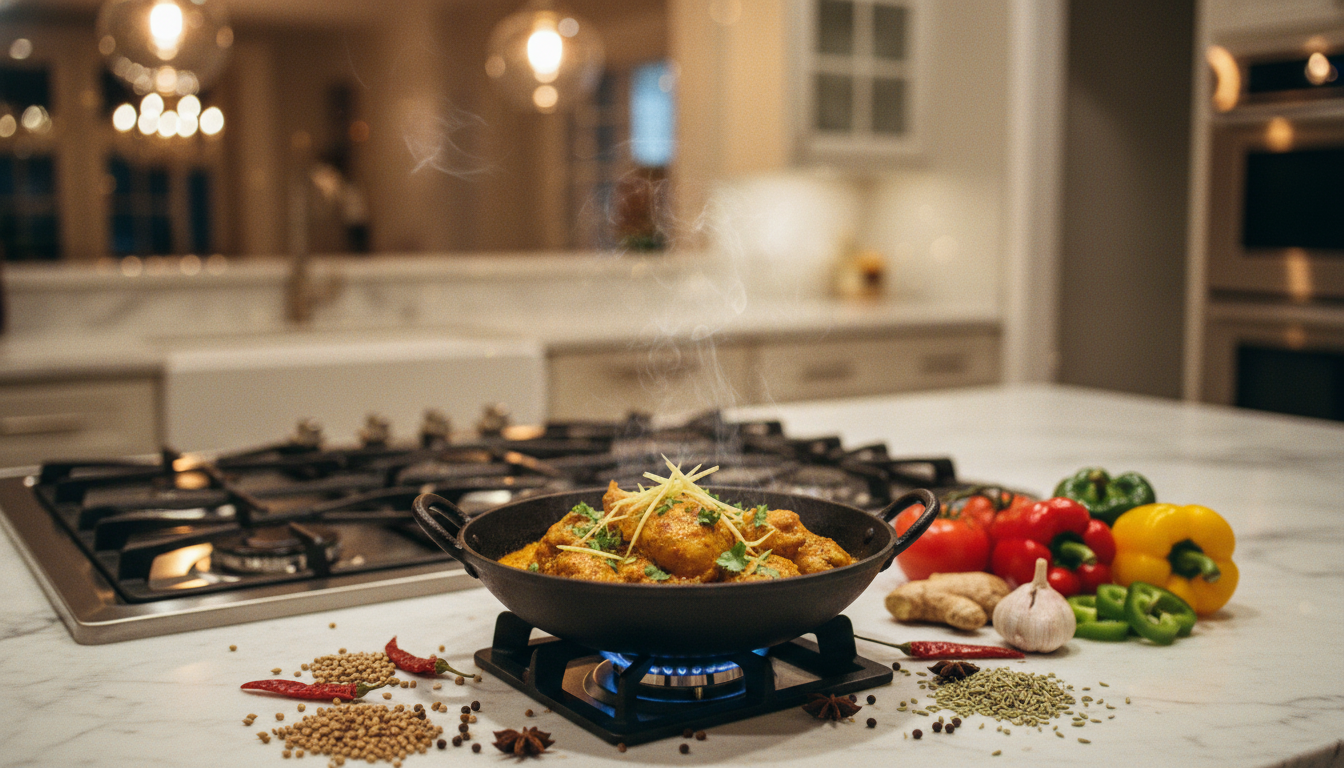
The finishing touches make all the difference. Sprinkle your freshly ground kadai masala, then top with julienned ginger, sliced green chilies, and fresh coriander [3]. Each adds its own element: ginger brings heat bursts, chilies add brightness, and coriander provides freshness [13]. Serve directly in the cooking vessel for that authentic restaurant presentation [3].
Serving Suggestions That Highlight Kadai Chicken
Pair your kadai chicken with accompaniments that complement its bold flavors. Traditional flatbreads work perfectly—butter naan provides richness while tandoori roti echoes the dish's smoky notes [1]. For rice lovers, plain basmati showcases the curry's complexity, or try jeera rice for extra aromatics [1].
Create a complete meal by adding dal for protein variety and textural contrast [1]. For restaurant-style presentation, serve directly in your cooking vessel, garnished with ginger juliennes and fresh coriander [19]. Balance the heat with cooling sides like raita or kachumber salad [18].
Want that restaurant look? Quickly stir-fry extra bell peppers and onions until slightly charred, then arrange on top for visual impact and crunch [1]. This relatively dry curry makes an approachable introduction to Indian cuisine for first-timers—less intimidating than saucier options [19].
Healthy and Budget‑Friendly Variations
Swap pricey chicken breasts for budget-friendly bone-in thighs or switch to paneer, mushrooms, or tofu to slash cost and calories while tripling vitamin B12, doubling iron and zinc, and keeping kadai’s signature spice-kissed flavor.
Lean Chicken Breast vs Bone‑In Pieces for Kadai Chicken
Choosing between lean chicken breast and bone-in pieces affects both nutrition and cooking results. Boneless, skinless chicken breasts deliver approximately 165 calories and 31g protein per 3. 5-oz serving with just 3.
6g fat [22]—perfect for cutting calories while maintaining protein intake. Bone-in chicken thighs contain about 30% more calories and three times the fat, but that fat ensures juicier meat and richer flavor during high-heat cooking [20]. Thighs also pack more nutrients, with nearly triple the vitamin B12, double the iron, and twice the zinc of breast meat [20].
As discussed in earlier sections, bone-in pieces align with traditional preparation methods, enhancing sauce richness through natural collagen. When using breast meat, reduce cooking time and watch carefully—without protective fat, it dries out quickly [20]. For budget-conscious cooks, bone-in pieces cost less while delivering more flavor [21].
Vegetarian Swaps: Paneer and Mushroom Kadai Chicken Alternatives
Paneer and mushrooms offer protein-rich alternatives to chicken while maintaining kadai's distinctive flavor profile. Kadai paneer uses Indian cottage cheese cubes that absorb the signature spices while providing a creamy texture contrast to the chunky sauce. The preparation closely follows traditional kadai chicken—marinating paneer in spiced yogurt before cooking enhances its ability to absorb flavors [23]. For vegan options, extra-firm tofu, cauliflower, or soya chunks substitute effectively for paneer [23].
Kadai mushroom masala features button mushrooms that provide a satisfying meaty texture and earthy depth. These mushrooms cook faster than chicken and absorb spices more readily, requiring briefer cooking times to prevent mushiness [24]. Both vegetarian versions maintain the essential kadai masala base but modify cooking techniques—mushrooms need only 2-3 minutes in the prepared gravy to retain their texture while developing flavor [24]. The bell peppers remain crucial in vegetarian adaptations, providing characteristic crunch and color while balancing the dish's spice profile [24].
For either variation, the final dish still benefits from the traditional kadai preparation method, with freshly ground spices added in stages to create authentic flavor development [23]. These vegetarian options prove equally compatible with traditional accompaniments like naan, chapati, or rice [24].
Low‑Oil and Dairy‑Free Adaptations of Kadai Chicken
Traditional kadai chicken uses generous amounts of ghee and oil, but simple adaptations create equally flavorful healthier versions.
Quick Weeknight Shortcuts Without Sacrificing Kadai Chicken Taste
Busy weeknights don't mean sacrificing authentic kadai chicken. As detailed in the recipe section, prepare kadai masala ahead and store in an airtight container for up to 3 weeks [1]. Choose boneless chicken thighs for faster cooking without sacrificing juiciness [11].
Weekend meal prep transforms weeknight cooking—prepare and freeze your onion-tomato base for a ready foundation [1]. Quality store-bought kadai masala works in a pinch, though freshly ground spices deliver better flavor [14]. Cut chicken into smaller, uniform pieces and prep all ingredients before starting [1].
Pressure cookers and Instant Pots significantly reduce cooking time while maintaining flavor [11]. For restaurant-style texture, quickly stir-fry bell peppers and onions separately until slightly blistered, adding them in the final minutes to preserve their signature crunch [1].
Pairings, Side Dishes, and Meal Planning
From pillowy garlic naan to 70-calorie tawa roti and aromatic ghee rice, the right bread or grain transforms kadai chicken into a perfectly balanced, restaurant-worthy meal.
Best Breads: Naan, Roti, and Alternatives for Kadai Chicken
Kadai chicken pairs exceptionally well with naan, a leavened flatbread traditionally cooked in a clay tandoor oven. The bread's soft texture and slight chewiness make it ideal for scooping up the textured, spice-forward sauce of kadai chicken [27]. Garlic naan adds complementary flavor that enhances the dish's aromatic profile, particularly balancing dishes like kadai chicken with its bold spices [27]. Tandoori roti offers a lighter alternative that develops a smoky flavor from the tandoor, making it an excellent companion to kadai chicken's own smoky notes [29].
For health-conscious diners, tawa roti contains just 70-80 calories per piece compared to naan's 250-300 calories while still providing the necessary texture to enjoy the dish [29]. Paratha, with its flaky, ghee-layered construction, creates a rich contrast to kadai chicken's spicy profile [28]. The bread's buttery layers provide textural interest against the chunky kadai sauce [28]. Regional alternatives include kulcha, which resembles naan but uses baking powder instead of yeast, and Amritsari kulcha with its crispy exterior and potentially spiced potato filling that complements kadai chicken's flavors [28].
For those seeking different textures, puri (deep-fried unleavened bread that puffs up when cooked) offers a crispy contrast to the sauce's richness [28]. While less common with kadai chicken, bhakri—a hearty flatbread made with sorghum or millet flour—provides a nutritious alternative with its coarser texture and higher fiber content [28].
Rice Options That Complement Kadai Chicken Perfectly
Aromatic rice dishes create the perfect foundation for kadai chicken's bold flavors. Ghee rice stands out as an exceptional pairing, complementing the spice-forward profile of kadai chicken with its subtle aromatics and rich mouthfeel [30]. This simple yet flavorful rice combines basmati with whole spices including bay leaf, cloves, cardamom, and cinnamon, all enhanced by caramelized onions and ghee (clarified butter) [30].
When preparing ghee rice, the quality of the basmati matters—long-grain varieties that remain fluffy after cooking work best [30]. The cooking method contributes significantly to the pairing's success, with the whole spices blooming in hot ghee before adding rice, creating fragrant notes that balance kadai chicken's intensity without competing [30]. Beyond ghee rice, plain basmati provides a neutral canvas that highlights the chicken's complex spices, while jeera (cumin) rice adds complementary earthy notes [30].
For a complete meal structure, pulao variations like vegetable or pea pulao introduce textural contrast and visual appeal alongside kadai chicken's rich sauce [30]. When serving, the timing matters—freshly made rice retains its ideal texture and absorbs the kadai gravy without becoming soggy, making it the preferred option over rice prepared far in advance [30].
Balancing the Meal with Vegetables and Salads Alongside Kadai Chicken
A complete Kadai chicken meal benefits from thoughtfully selected vegetable sides that complement its bold flavors while adding nutritional balance. Kadai vegetable (veg kadai) makes an ideal pairing as it uses the same distinctive spice blend with mixed vegetables that retain vibrant colors and slight crunch [31].
This creates flavor consistency while adding essential vitamins and minerals [31]. Cooling raitas provide temperature contrast and probiotic benefits that balance the chicken's spicy profile—try Pumpkin or Beet & Cucumber varieties [32].
Fresh salads add necessary textural variation; crisp options like paneer tikka salad or chana salad refresh the palate between bites of richly spiced chicken [31]. For optimal nutrition, aim for a plate composition of approximately 50% vegetables, creating not just a flavorful experience but a nutritionally complete meal with varied textures and complementary flavors [33].
Storing Leftovers and Reheating Tips for Kadai Chicken
Proper storage extends kadai chicken's shelf life while maintaining its distinctive flavors. Store leftovers in airtight containers in the refrigerator where they remain fresh for 3-7 days [1]. For longer preservation, freeze portions in small containers for up to 3 months [1]. When freezing kadai chicken, consider omitting bell peppers as they become soggy when thawed and reheated [1].
Instead, prepare fresh capsicum to add during the reheating process for optimal texture and flavor [1]. To minimize freezer burn that affects texture, double wrap your kadai chicken and ensure it's covered with sauce before freezing as a solid block [34]. For best results when reheating frozen kadai chicken, defrost overnight in the refrigerator rather than using quick-thaw methods [1]. Reheat thoroughly either in a microwave for convenience or on the stovetop for more even heating that better preserves the dish's texture [1].
When reheating on the stovetop, a saucepan works best to maintain the curry's consistency [34]. If your original dish contained bell peppers that have softened during storage, quickly stir-fry fresh ones to add back the characteristic crunch that defines restaurant-style kadai chicken [1].
Key Takeaways
Kadai chicken is a Pakistani Pashtun dish, not Indian Mughal.
- Kadai chicken is a Pakistani Pashtun dish, not Indian Mughal.
- Use a cast-iron kadai or heavy pan for authentic smoky flavor.
- Freshly roasted, coarsely ground kadai masala is essential.
- Bone-in, small-cut chicken gives deeper flavor than boneless.
- Cook tomatoes until oil separates for the right thick texture.
- Add julienned ginger and sautéed peppers at the end for crunch.
- Refrigerate leftovers 3–7 days; freeze up to 3 months without bell peppers.
References
- https://www.indianhealthyrecipes.com/kadai-chicken/
- https://en.wikipedia.org/wiki/Chicken_karahi
- https://sinfullyspicy.com/punjabi-kadai-chicken/
- https://www.spicezone.com/kadai-chicken-a-culinary-delight-from-india/
- https://foodrecipepp.muragon.com/entry/17.html
- https://kitchenofdebjani.com/2024/01/karahi-chicken-restaurant-style-kadai-chicken-recipe/
- https://badshahmasala.com/recipes/kadai-chicken-recipe/?srsltid=AfmBOooCDOWkpsw178uiPg7nULXLa0Xjxca09o_VQ065wDBSIkCJgWnU
- https://brodees.com/the-art-and-science-of-cooking-with-the-kadai/
- https://sonucookware.com/blogs/news/how-to-choose-a-kadai-for-cooking
- https://foodiesterminal.com/chicken-karahi-dhaba-style/
- https://pipingpotcurry.com/kadai-chicken/
- https://www.teaforturmeric.com/chicken-karahi/
- https://fatimacooks.net/chicken-karahi-recipe-pictures-tips-authentic/
- https://flavorquotient.com/2016/08/restaurant-style-kadai-chicken-authentic-chicken-karahi-recipe/
- https://www.thedeliciouscrescent.com/kadai-chicken-recipe/
- https://foodiesterminal.com/kadai-masala/
- https://myfoodstory.com/karahi-chicken/
- https://www.sharmiskitchen.com/2017/05/kadai-chicken-recipe-restaurant-style-chicken-karahi/
- https://showmethecurry.com/non-vegetarian/kadhai-chicken.html
- https://kaynutrition.com/chicken-breast-vs-chicken-thigh/
- https://www.eatright.org/food/food-groups/protein-foods/breasts-vs-thighs-which-is-more-nutritious
- https://www.medicalnewstoday.com/articles/326767
- https://cookilicious.com/kadai-paneer-recipe/
- https://www.spiceindiaonline.com/kadai-mushroom-masala-recipe/
- https://kellyscleankitchen.com/2024/02/01/chicken-karahi/
- https://www.snapcalorie.com/recipes/dairy-free_kadai_chicken.html
- https://www.tasteofhome.com/collection/indian-bread-types/
- https://sukhis.com/a-guide-to-the-breads-of-india/
- https://littlenepal.ca/indian-breads-naans-parathas-and-more/
- https://lovetostayhome.com/ghee-rice-kadai-chicken/
- https://www.gohealthyeverafter.com/kadai-vegetable-veg-kadai-recipe/
- https://ministryofcurry.com/recipes/sides/
- https://indianambrosia.com/side-dishes-for-chicken-curry/
- https://cooking.stackexchange.com/questions/69094/freezing-indian-chicken-curry-how-to-retain-texture-and-flavor