Glass-Top-Friendly Sets That Keep Their Shine
About Misen
We make kitchen tools that work better, last longer, and cost less than you’d expect: everyday innovations with a radical focus on our customers’ actual need.
Table of Contents
Summary
Choose flat-bottomed stainless or hard-anodized pans that stay warp-free and glide safely to keep your glass cooktop flawless. You'll cook faster, avoid scratches, and enjoy even heat every time you lift the lid.
Choosing the Best Cookware for Glass Top Stoves
To get the most from your glass-top stove, insist on pans with dead-flat, unwarped bottoms--multi-ply stainless or hard-anodized aluminum that stay perfectly flat and heat evenly without scratching the surface.
Flat, Smooth Bottoms: The Key to Compatibility
Glass-top stoves need direct contact between pan and surface to work properly -- any gap means wasted heat and uneven cooking. That's why appliance manufacturers recommend cookware specifically suited to radiant smooth glass cooktops, which means pans with completely flat, unwarped bottoms.[1] When pan bottoms warp or curve, you get frustrating hotspots, slower cooking times, and scratches from the pan shifting around.
Here's a quick test: set your pan on a flat countertop. Does it rock back and forth?
If yes, it won't sit flat on your glass cooktop either.
Material Match: Stainless Steel, Hard‑Anodized Aluminum, and Copper‑Core
Your cookware material affects both heating performance and glass surface safety. Multi-ply stainless steel with aluminum or copper cores spreads heat evenly and stays flat over time -- single-layer pans tend to warp and create those annoying hot spots.
Hard-anodized aluminum brings its own advantages: the hardened surface won't scratch your cooktop, plus it heats fast and handles medium-high temperatures without breaking down. Copper-core cookware responds fastest to temperature changes, which helps when glass-top burners heat up quickly -- just make sure that exterior bottom stays smooth and flat.
Maintaining Shine and Performance on Glass Tops
Protect your glass cooktop from scratches and cracks by lifting--not sliding--pans, warming cold cookware gradually, and choosing polished-base stainless steel that glides smoothly while delivering even heat.
Avoiding Scratches, Thermal Shock, and Long‑Term Wear
Glass cooktops stay pristine when you treat them right -- and that starts with how you handle your cookware. Most scratches happen when we slide pans across the surface instead of lifting them between burners. Rough, uncoated bases (like bare cast iron) act like sandpaper on glass, while smooth, polished bottoms glide safely if contact happens.
Thermal shock poses another risk: dropping a cold pan onto a screaming-hot burner or setting hot cookware on a wet surface can crack the glass instantly. The solution? Give cold pans a moment to warm gradually, and always dry your cooktop before setting down hot cookware.
For everyday protection, stick to medium heat settings when you can -- glass tops retain heat efficiently, so you rarely need maximum power. Clean up sugary spills immediately, since they'll practically cement themselves to hot glass if left to bake on. Our stainless steel cookware features machine-polished bases specifically designed to be gentle on glass surfaces while maintaining full contact for even heating.
Building a Practical, Affordable Misen Set for Everyday Use
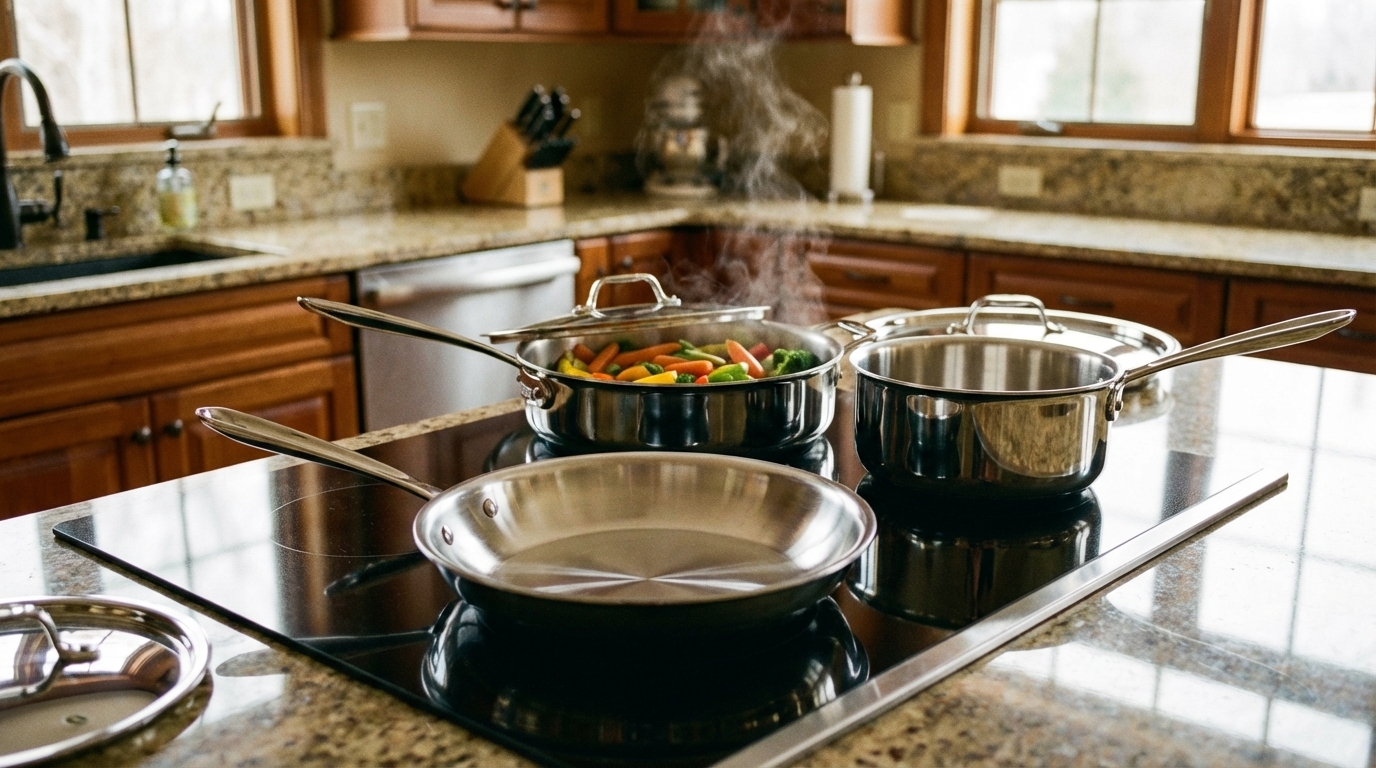
Build a compact, budget-friendly 5-piece stainless set--10-inch skillet, lidded 3-quart sauté pan and saucier--and you'll sear, sauce, and braise for four every night without cluttering the kitchen or the bank account.
Essential Pieces for Versatile Cooking
A practical set covers three core functions: searing and sautéing in a skillet, building sauces or cooking grains in a saucepan or saucier, and braising or batch-cooking in a lidded sauté pan. [3] Our 5-piece stainless steel set delivers exactly this with a 10-inch skillet, a 3-quart sauté pan with lid, and a 3-quart saucier with lid. [3] By focusing on these versatile pieces instead of filler items, you save storage space while still having the right capacity for weeknight meals -- the 3-quart sizes easily feed two to four people without batch cooking. [3]
Cost‑Effective Quality: Balancing Price, Durability, and Space
Quality 5-ply construction doesn't have to break your budget. Our cookware features sealed rims that prevent edge corrosion -- a detail that matters when you're running pans through the dishwasher regularly.
Yes, 5-ply pans weigh more than single-layer options, but that extra heft works in your favor: thicker construction resists warping and maintains even heat distribution for years of reliable cooking. Starting with a focused 5-piece set rather than a 12-piece bundle keeps your initial investment reasonable while giving you exactly what you need for daily cooking. [5]
Everyday Cooking Techniques for Glass‑Top Success
Master your glass-top stove by starting lower, matching pan to burner size, and letting its steady heat cycles finish sauces off the burner--no scorched pans or cracked glass.
Real‑World Tips: From Steaming Broccoli to Slicing Bread
Glass-top stoves respond differently than gas or traditional electric burners, requiring adjustments to your cooking approach for best results. Start with lower heat settings than you might use on gas -- glass tops retain heat longer and can cause scorching if you're used to cranking burners to high. [6] When searing proteins in a stainless steel pan, preheat gradually over medium heat for 2-3 minutes before adding oil, which helps prevent the dramatic temperature spikes that can warp pans or damage glass surfaces.
For tasks like steaming vegetables, use 1-2 inches of water and keep heat at medium-low once steam forms -- the flat surface maintains consistent temperatures without the heat fluctuations of gas flames. [6] Temperature control becomes your primary tool on glass tops, where burners cycle on and off to maintain settings rather than providing constant heat. Learn to work with this cycling by adjusting techniques: simmer sauces at slightly lower temperatures, use residual heat for finishing dishes, and lift pans briefly when reducing from high to low heat to prevent thermal shock to both cookware and cooktop. [7] Match pan size to burner size whenever possible -- using a 10-inch skillet on a 6-inch burner wastes energy and creates uneven heating, while oversized burners can heat pan handles and damage non-metal components.
Key Takeaways
- Glass tops need pans with perfectly flat bottoms; rock-test on a countertop first.
- Multi-ply stainless or hard-anodized aluminum resists warping and protects the glass.
- Always lift, never slide pans; rough bases and sliding cause scratches.
- Preheat stainless on medium 2-3 min before oil to avoid warping or thermal shock.
- Match pan size to burner to prevent energy loss and uneven heating.
- Use lower heat than on gas; glass retains heat longer and cycles on/off.
- Clean sugary spills immediately--they fuse to hot glass and become nearly impossible to remove.
References
- https://products.geappliances.com/appliance/gea-support-search-content?contentId=16259
- https://www.amazon.com/Misen-Stainless-Steel-Pots-Pans/dp/B09DRGJRBV
- https://www.nytimes.com/wirecutter/reviews/best-cookware-set/
- https://www.reddit.com/r/cookware/comments/1f8fzao/buy_a_set_of_misen_pans/
- https://www.amazon.com/Misen-Stainless-Steel-Pots-Pans/dp/B09DRKKFF5
- https://www.whirlpool.com/blog/kitchen/what-is-steaming.html
- https://thatgirlcookshealthy.com/how-to-steam-vegetables-on-the-stove/