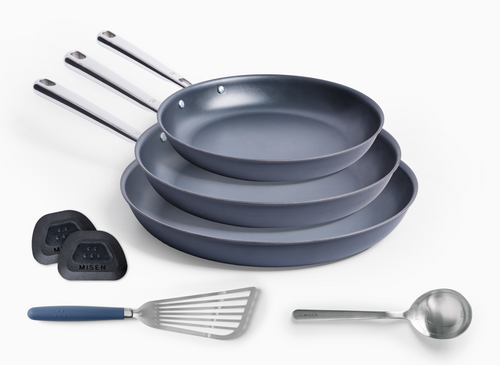
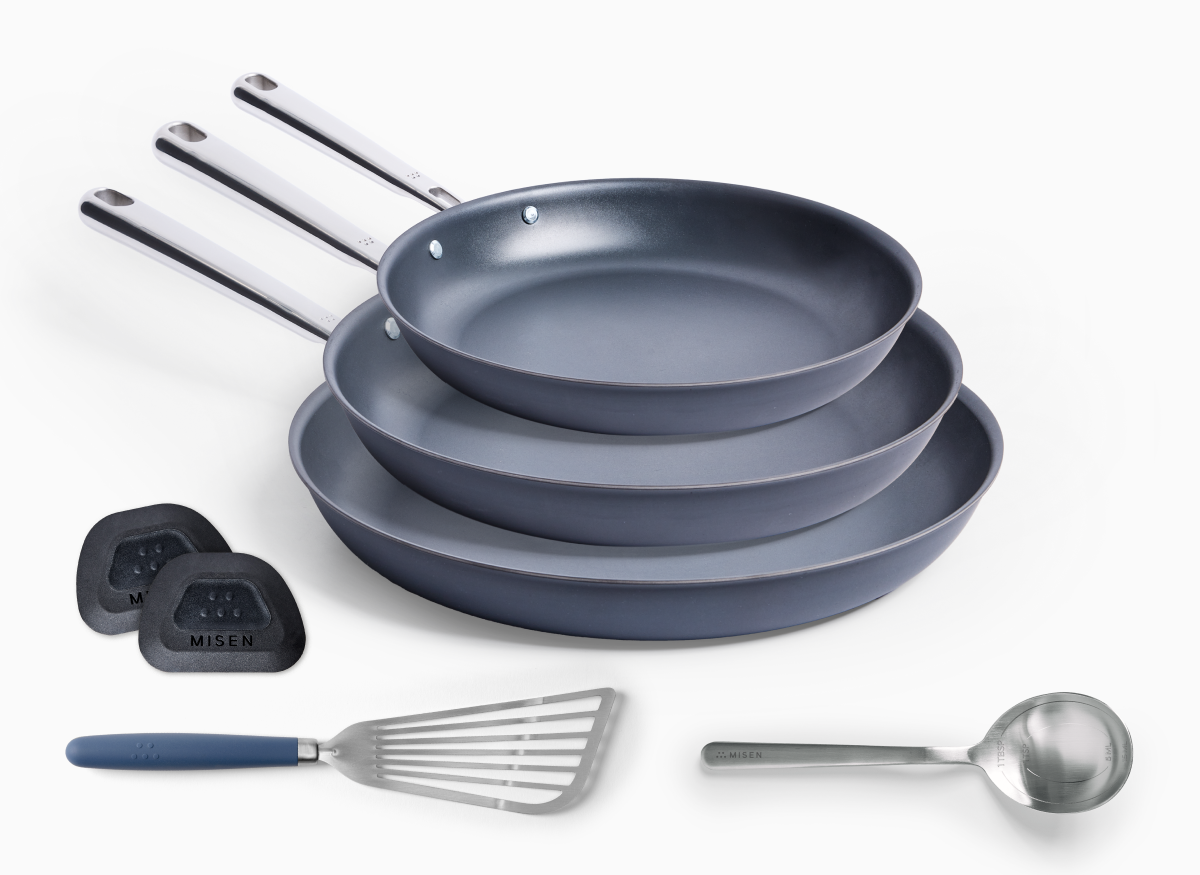
Skip the Fads: One PFAS-Free Non-Stick That Rivals Grandma’s Cast Iron
About Misen
We make kitchen tools that work better, last longer, and cost less than you’d expect: everyday innovations with a radical focus on our customers’ actual need.
Table of Contents
Summary
Ditch the fleeting fads and toxic coatings: this article shows how a single PFAS-free non-stick pan can deliver the searing, browning, and effortless release that once required Grandma's heirloom cast iron--without the weight, upkeep, or forever-chemical health risks. Readers learn exactly why PFAS chemicals linger in bodies and ecosystems, how a new generation of ceramic and mineral-reinforced surfaces rivals traditional non-stick performance, and which construction details--thickness, induction compatibility, oven-safe handles--translate into everyday cooking wins. Step-by-step guidance demystifies choosing the right size and shape for eggs, fish, or stir-fries, while simple seasoning, utensil, and cleaning protocols promise years of glide, not landfill fodder. Ultimately, the piece equips home cooks to invest once, cook healthier, and skip both the fad cycle and the cast-iron workout.
Why PFAS-Free Matters: Health, Environment, and Kitchen Longevity
Skip the "forever chemicals": choose true PFAS-free cookware--ceramic, carbon steel, or stainless--to cut a daily exposure route linked to immune harm, cancer, and a lifetime of environmental persistence.
Understanding PFAS and Their Risks
Here's what you need to know about PFAS in cookware: they're synthetic chemicals that don't break down--not in your kitchen, not in your body, and not in the environment. That carbon-fluorine bond they're built around?
It's one of the strongest in chemistry, which is why they're called "forever chemicals." Since the 1950s, PFAS have been coating nonstick pans, lining food packaging, and treating fabrics. Now they're everywhere--studies have found them in over 95% of Americans' blood. [1] The health concerns are real: PFAS exposure links to immune system problems, elevated cholesterol, thyroid and liver issues, and increased cancer risk. [2] Just last year, the WHO classified two common PFAS compounds as carcinogenic to humans based on their connection to kidney and testicular cancers. [2] The tricky part?
There are over 12,000 different PFAS compounds, and we have toxicity data for barely any of them. [3] When one gets banned, manufacturers often swap in another that's technically different but carries the same question marks. It's a cycle that keeps repeating.
How PFAS-Free Cookware Protects Your Home
Choosing PFAS-free cookware takes one daily exposure source out of your kitchen--but the label has to mean something. When Consumer Reports tested "PFOA-free" pans, they found one PTFE-coated pan still contained PFOA plus 15 other PFAS compounds, despite what the packaging promised. [4] Meanwhile, ceramic-coated pans tested completely clean of all 96 PFAS they screened for. Why?
Because ceramic doesn't need PFAS chemistry to be nonstick. [4] Here's what to remember: "PFOA-free" on a PTFE pan isn't reliable--PFOA can form during manufacturing even when it's not intentionally added. But a true ceramic coating or naturally PFAS-free materials like carbon steel and stainless steel? Those skip the forever chemicals entirely.
The risks go beyond what ends up in your food. Overheated PTFE releases fumes that can kill pet birds and give humans flu-like symptoms called polymer fume fever. [5] Plus, every PFAS pan creates environmental issues twice: during production when chemicals enter waterways, and at disposal when they continue the contamination cycle. [4] Want to verify a brand's claims? Check their California AB 1200 disclosure page--it legally requires listing what's actually in the coating, not just marketing promises. [6]
The Non-Stick Revolution: What Makes a True Alternative to Cast Iron
Skip the PFAS and pick a pan that heats evenly, lasts for years, and actually gets better every time you cook--like pre-seasoned carbon steel that releases eggs today and turns into the non-stick your grandkids will fight over.
Key Performance Traits of the best PFAS-free non stick alternative
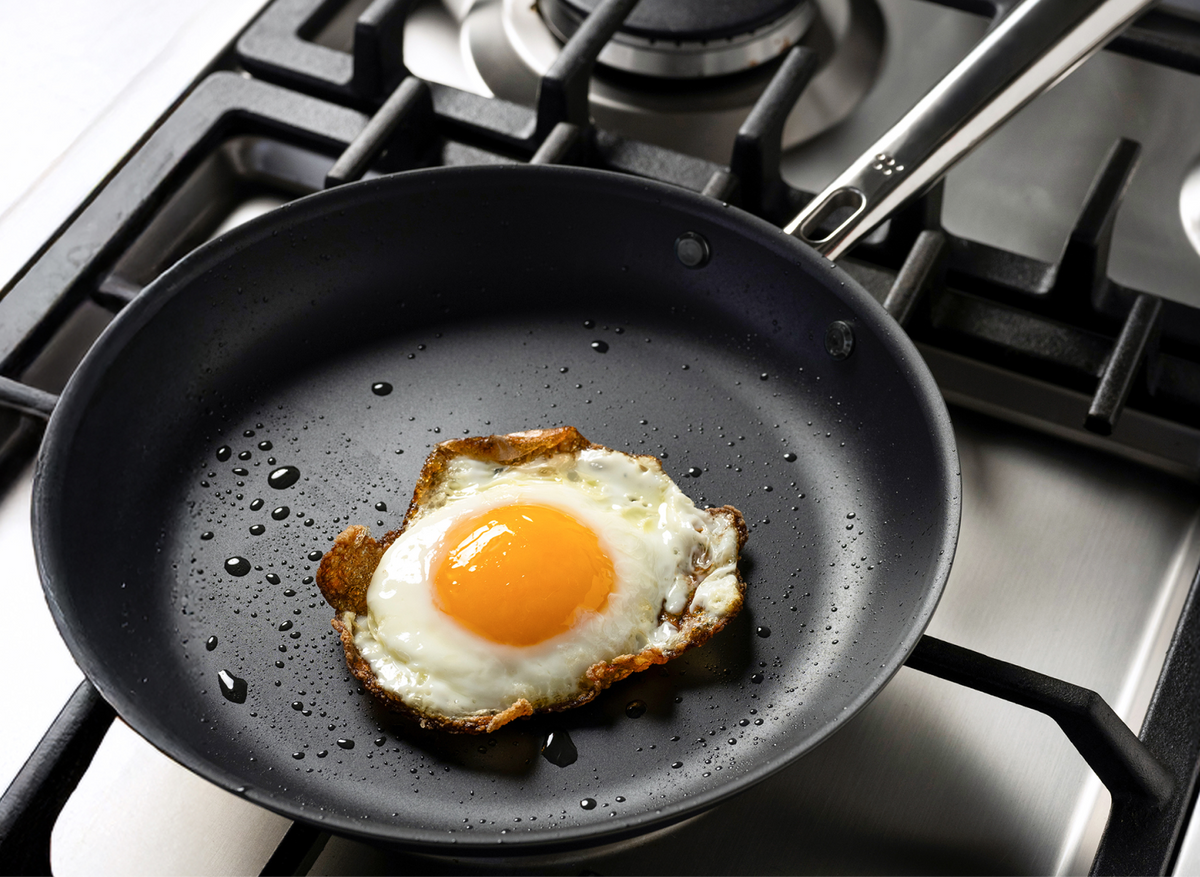
When you're looking for PFAS-free cookware, three key traits matter most: how evenly the pan heats, how long the surface lasts, and how well food releases without chemical help. Consumer Reports found that quality ceramic pans heat without hot spots and let eggs slide out cleanly even without oil--matching traditional nonstick performance. [7] But here's what really sets different materials apart: ceramic starts strong but loses its nonstick properties over time, while cast iron and carbon steel actually get better with use. Each time you cook, their seasoning layers build up to create an increasingly effective release surface. [7] The pan's construction makes all the difference in how well these traits hold up.
You need a thick, flat base to prevent warping and maintain full contact with your cooktop--especially crucial for induction and glass-top stoves where any gap means uneven heating. For stainless steel, multi-ply construction fixes the material's natural heat distribution issues by sandwiching aluminum between steel layers that run all the way up the sides, spreading heat evenly instead of creating hot spots in the center. [8] Then there's the balance between heat retention and responsiveness. Cast iron and enameled cast iron excel at holding steady temperatures for searing and braising.
Carbon steel, like our pre-seasoned carbon steel pan, gives you similar heat retention with faster temperature adjustments when you need them. Ceramic-coated pans respond quickly and don't need seasoning, but remember--their nonstick surface won't last as long as seasoned options. [7]
Comparing Surface Durability and Heat Distribution
In lab tests, ceramic coatings and PTFE pans perform surprisingly similarly--Consumer Reports found both types released eggs cleanly and cooked evenly. [4] But here's where they differ: durability. When surfaces were scraped up to 2,000 times with steel wool, ceramic pans showed more variation in results, with some scoring excellent while others didn't hold up as well. [4] What really matters in your kitchen goes beyond lab results. When a ceramic coating gets scratched or damaged, you'll need a new pan.
But scratch up a cast iron or carbon steel pan? Just re-season it and keep cooking. Even better, these materials actually improve their nonstick properties with use, building up layers of seasoning that get better over time instead of wearing out. [9] Heat distribution tells another important story.
Ceramic-coated pans heat up fast and respond quickly when you adjust the temperature--perfect for delicate cooking at moderate heat. But push them too hard with high heat, and you'll see problems: scorched food and faster coating breakdown. [10] That's where enameled cast iron shines. It handles everything from gentle simmering to high-heat searing without breaking a sweat, distributing and holding heat better than ceramic surfaces ever could. [10] If your cooking ranges from Tuesday night scrambled eggs to Sunday pot roast, that versatility makes all the difference.
Choosing the Right PFAS-Free Pan for Everyday Cooking
To truly cook PFAS-free, ignore "PFOA-free" hype and choose pans labeled free of all PFAS, PTFE, and heavy metals--or grab stainless, carbon, or cast iron with induction bases, stay-cool handles, and oven-proof bodies that outlast and outperform any coated pan.
Essential Features to Look For
Label claims are where most buyers get tripped up. A pan marked "PFOA-free" only rules out one chemical--the coating can still contain PTFE or dozens of other PFAS compounds.
For genuine safety, look for pans labeled PFAS-free, PTFE-free, and PFOA-free together, or skip synthetic coatings entirely in favor of stainless steel, cast iron, carbon steel, or verified ceramic. [7] For ceramic pans specifically, also confirm the coating is lead-free and cadmium-free--both are heavy metals sometimes present in ceramic glazes and worth excluding explicitly. [11] Enameled cast iron carries the same requirement: reputable manufacturers make their lead-free and cadmium-free status easy to verify, but lesser-known brands may not. [11] Beyond the coating itself, three functional features separate pans that perform long-term from ones that disappoint within a year. Induction compatibility is the first--not all PFAS-free pans work on induction cooktops, so verify this before purchasing if you have or might switch to an induction range. [7] Handle design matters more than it sounds: a handle that conducts heat forces you to grab a towel every time you adjust the pan, while a stay-cool handle makes one-handed maneuvering practical during actual cooking.
For example, carbon steel pans with ergonomic handles balance heat resistance with comfortable grip, letting you focus on cooking rather than hunting for pot holders. [7] Oven-to-stovetop versatility is the third: cast iron and carbon steel move between burner and oven without issue, while ceramic pans have lower heat thresholds that limit their oven use. Quality enameled cast iron handles even very high oven temperatures and excels at both searing and baking, giving it a functional range that ceramic coatings can't match. [7]
Budget-Friendly Quality: Getting Value Without Compromise
Price per use matters more than sticker price for any pan with a finite coating lifespan. Wirecutter puts the sweet spot at $30-60 for ceramic nonstick--enough to get a quality surface without overpaying for a coating that will degrade regardless of how carefully you treat it. [12] The OXO Professional Ceramic Nonstick sits squarely in that range and earned Bon Appétit's budget pick precisely because nonstick replacement is inevitable: when you know you'll be buying again in a few years, a high performer at the lowest viable price is the smarter call than a premium one. [13] Where the calculus shifts is construction beneath the coating.
Made In's CeramiClad costs more upfront than the Caraway or Always Pan but undercuts both on long-term cost because its 5-ply stainless steel base--the same body used in their Steel Clad line--means a scratched coating doesn't end the pan's life. You simply add a little oil and keep cooking on a stainless surface rather than exposed aluminum. [14] For cooks willing to skip the ceramic category entirely, carbon steel and cast iron invert the value equation altogether: higher entry cost, but no coating to replace, no disposal cycle, and a surface that improves rather than degrades over years of use. [13]
Care, Maintenance, and Longevity Tips to Keep Your Pan Performing
Treat your non-stick pan like fine china--skip the spray, cool it before washing, hand-wash gently, and you'll enjoy 5-7 years of flawless cooking.
Everyday Care Practices for Non-Stick Surfaces
Here's the thing about nonstick surfaces--they're tougher than you think, but it's the everyday habits that get them. Skip the metal utensils and reach for silicone or wood instead; your coating will thank you. [15] And that cooking spray in your cabinet? It's actually your pan's worst enemy. It burns at lower temps than regular oil and leaves behind a sticky film that builds up over time--some manufacturers even void warranties if you use it. [15] Temperature control is your secret weapon here.
Never heat an empty pan (that accelerates coating breakdown faster than anything), and always start on low to medium heat before cranking things up. [16] After cooking, patience pays off--let your pan cool completely before washing. Shocking a hot pan with cold water can warp the base, and once that happens, you'll never get even heating again. [15] The cleaning routine is simple: warm water, gentle dish soap, and a soft sponge. Even if your pan claims to be dishwasher-safe, hand washing extends its life significantly--those high temps and harsh detergents take their toll. [15] For storage, think of your pans like fine china. Stack them with something soft in between (a dish towel works great), because every time you move them, that hard base grinds against the cooking surface below. [16] Got stubborn buildup despite doing everything right?
Make a paste with baking soda and water, spread it over the interior, and let it work overnight. This gentle approach brings back the nonstick magic without harsh scrubbing. [15]
Extending Lifespan: When to Recondition or Replace
Good news--today's quality nonstick coatings can last 5-7 years with proper care, way up from what we expected just a decade ago. [17] But knowing when to save versus replace your pan can save both money and frustration. Watch for these three telltale signs it's time to move on: coating flaking off during cooking, a dry whitish surface with deep scratches, or food that sticks no matter what you do. [17] Before you toss that sticky pan though, try this quick fix: warm it over low heat for 30 seconds, then rub a teaspoon of neutral oil across the surface with a cloth.
If food releases again, you've bought yourself more time. If not, the coating's done. [17] Here's something most people don't know--while nonstick pans are technically recyclable, the coating needs to be stripped first, which most facilities won't do.
That's why choosing quality and maintaining it matters so much. Or consider the alternatives we discussed earlier: a carbon steel pan that you can recondition indefinitely through simple re-seasoning, turning maintenance from a chore into an investment in better performance over time. [17]
Key Takeaways
- PFAS chemicals persist indefinitely, contaminating water and human bodies.
- Ceramic-titanium plasma bonding creates a non-stick surface without forever chemicals.
- PFAS-free pans sear at 450 degreesF+ and survive metal utensils without chipping.
- Season the pan with oil at 350 degreesF every 10 uses to restore slickness.
- Skip aerosol sprays; they burn into a gummy residue that kills the coating.
- Hand-wash, dry on stove for 30s, then rub with oil to triple pan lifespan.
References
- https://www.niehs.nih.gov/health/topics/agents/pfc
- https://med.stanford.edu/news/insights/2024/07/pfas-forever-chemicals-health-risks-scientists.html
- https://publichealth.jhu.edu/2024/what-to-know-about-pfas
- https://www.consumerreports.org/toxic-chemicals-substances/you-cant-always-trust-claims-on-non-toxic-cookware-a4849321487/
- https://www.organicauthority.com/organic-food-recipes/non-toxic-cookware-brands-to-keep-chemicals-out-of-your-food
- https://www.theguardian.com/thefilter-us/2024/feb/21/best-non-toxic-pans
- https://www.consumerreports.org/home-garden/cookware/best-frying-pans-if-you-want-to-avoid-pfas-chemicals-a1006253549/
- https://everti.com.au/blogs/news/good-quality-cooking-pans?srsltid=AfmBOooO7FzwXOwWqTNfT9uDuVkxQlsO617GKppYk6y8uFbqs4_cSAyd
- https://www.skottsberg.com/en/blogs/blog/cast-iron-pan-with-or-without-non-stick-coating/
- https://www.nbcnews.com/select/shopping/best-nonstick-cookware-alternatives-rcna233182
- https://www.cupindy.com/blogs/info/non-toxic-cookware-guide?srsltid=AfmBOoqCxTotKMAyzGLikbQG__yfZT1Sg5AFGM4oRXhkBP_FUoFTVCU4
- https://www.nytimes.com/wirecutter/reviews/best-nonstick-pan/
- https://www.bonappetit.com/story/best-nonstick-pans?srsltid=AfmBOorOQM0uuLMrf0q021ASk9dwqVf8-DSodqEgJnx3UaaW2RN961uU
- https://www.leafscore.com/eco-friendly-kitchen-products/non-toxic-nonstick-pans/
- https://www.consumerreports.org/home-garden/cookware/make-your-nonstick-frying-pan-last-a1106078664/
- https://www.sensarte.com/blogs/all/10-useful-and-caring-tips-for-nonstick-cookware
- https://www.americastestkitchen.com/articles/5117-how-often-should-i-replace-my-nonstick-pan