Fish Turner Magic: Slim Blade, Flexible Wrist, Intact Filets
About Misen
We make kitchen tools that work better, last longer, and cost less than you’d expect: everyday innovations with a radical focus on our customers’ actual need.
Table of Contents
Summary
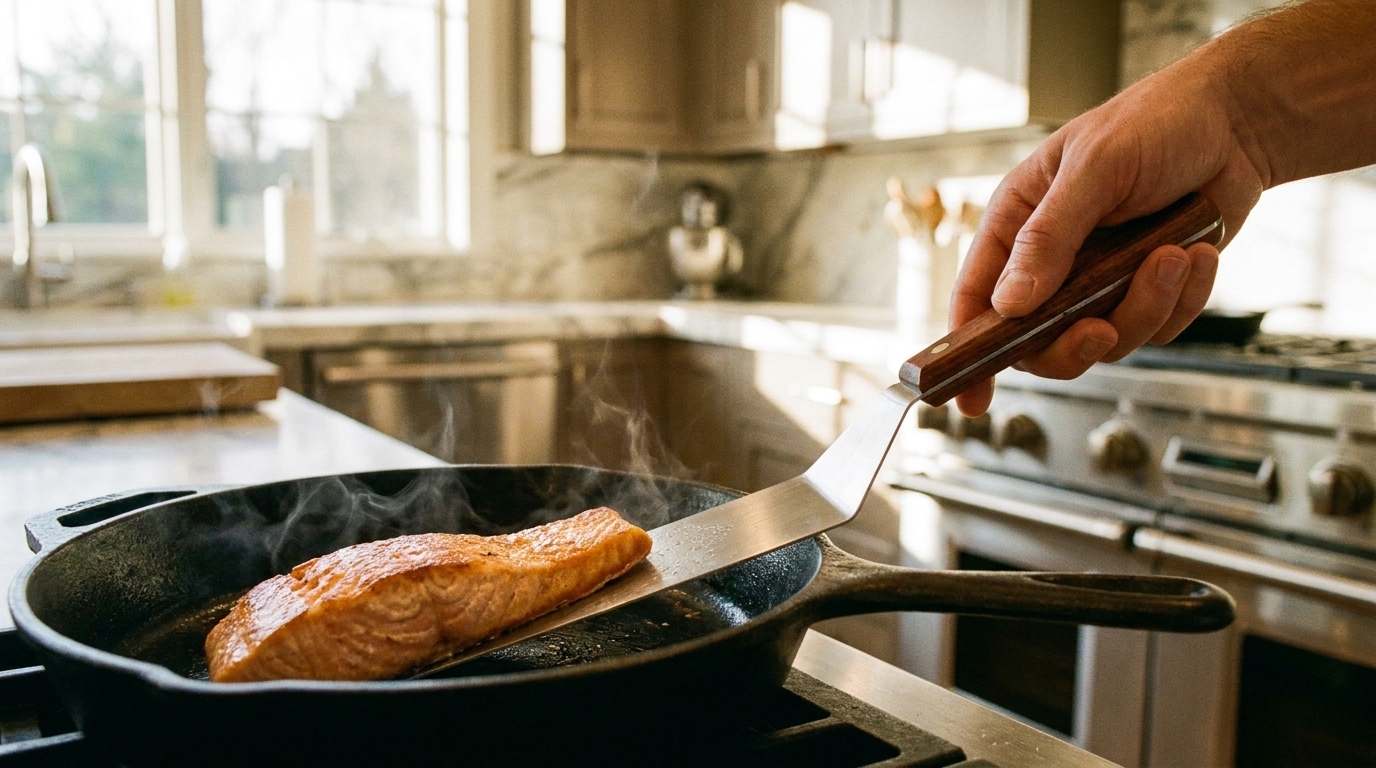
A thin, angled 6.5-inch blade and grippy wood handle let you slide under delicate fillets without tearing them. Choose metal for stainless pans, silicone for nonstick, and hand-wash to keep the turner your daily, do-everything spatula.
Key Features That Matter
A great fish turner balances a thin, 6.5-inch angled blade with a short wooden handle that keeps your grip steady and your fillets intact.
Blade Thickness & Flex
The blade is what separates a fish turner that works from one that frustrates you. You want it thin enough to slip under a delicate fillet without tearing it, but stiff enough to support the food -- too much flex and the spatula droops under the weight of even a pancake. [2] In testing, blades with a more angled edge (around 72-74 degrees) slid under food more cleanly than straighter ones, because the angle gently cups the food rather than forcing it up all at once. [1] A blade around 6.5 inches works well for most home pans -- long enough to support a fillet, short enough to stay maneuverable in smaller skillets. [1]
Handle Length & Grip
The handle is where control actually lives -- blade angle means nothing if the grip doesn't translate force cleanly through your wrist. Wooden handles consistently outperform rubber in real-use testing because they have more give and feel like a natural extension of the hand rather than a separate tool you're compensating for. [3] Handle length matters too: anything over seven inches starts to feel unwieldy for most home-pan tasks, and experienced cooks typically prefer a shorter handle that keeps the fish turner nimble in tight spaces. [3] A handle that stays dry and comfortable through repeated flips makes the difference between confident maneuvering and a dropped fillet.
Pro-Level Performance Tests
Master the slide test: choose a thin-yet-rigid blade with tight slots and the right angle to slip under cod or salmon without letting it sag, flake apart, or tear from the skin.
Slide Test: Delicate Fillets
A slide test reveals exactly where most fish turners succeed or fail -- it's not about the flip, it's about the entry. The blade has to be thin enough to slip cleanly under a fragile fillet like cod or salmon, while staying firm enough that the fillet moves with the spatula rather than sagging around it. [2] Slot width matters too: gaps that are too wide let flaky fish fall through mid-transfer, especially with varieties that break apart more easily. [2] A well-angled blade can also separate fillet from skin in one clean move, lifting cooked flesh off in a single piece without tearing it. [2]
Compare & Choose
Pick a metal-edged fish turner if you cook on stainless or carbon steel, a thin reinforced silicone edge if nonstick is your daily pan, and keep the blade under seven inches for effortless fillet flipping at home.
Metal vs. Silicone Edge
The edge material determines which pans your fish turner can safely work with. Metal edges are thinner and more precise -- they slide under delicate fillets with less resistance and allow better entry angle control, but they will scratch nonstick coatings on contact. [4] Silicone edges protect nonstick surfaces and withstand high heat, though poorly designed versions can be too thick and floppy to get cleanly under food, which cancels out everything that makes a fish turner useful. [4] If you cook primarily on stainless or carbon steel, a metal-edged turner performs better; if a nonstick frying pan is your daily driver, look for a silicone-edged turner with a thin, reinforced blade rather than a thick, rubbery one. [5]
Size Guide: 6" vs. 8" Blade
Blade length affects maneuverability more than it does capacity. In testing, spatulas with blades around 6.5 inches outperformed those with 8- or 9-inch blades for home cooking -- the longer options dwarfed standard fillets and felt unwieldy in a typical skillet. [1] Professional fish turners range from 6.5 to 9 inches, with the larger end suited to high-volume cooking where bigger portions are the norm. [6] For most home cooks using a standard 10- or 12-inch pan, a blade under seven inches gives you enough surface area to support a full salmon fillet while staying easy to maneuver in tighter spaces. [1]
Care & FAQs
Hand-wash your fish turner--whatever the handle--to keep it flipping everything from pancakes to pan sauces for years.
Dishwasher vs. Hand-Wash
Whether your fish turner is dishwasher-safe depends almost entirely on the handle material. Wooden handles will warp in the dishwasher -- the combination of heat and detergent breaks down the wood over time -- making hand-washing the only practical option for most metal-bladed turners with natural wood grips. [8] Stainless steel blades paired with plastic or synthetic handles are generally dishwasher-safe, though hand-washing slotted blades is worth the extra step to clear food debris from between the slots. [8] Silicone-edged turners can also go in the dishwasher, but even where it's technically allowed, hand-washing and thorough drying after each use extends the lifespan of both blade and handle.[7] A quick rinse with warm soapy water takes under a minute and is always the safer long-term call.[7]
Can It Replace Your Everyday Spatula?
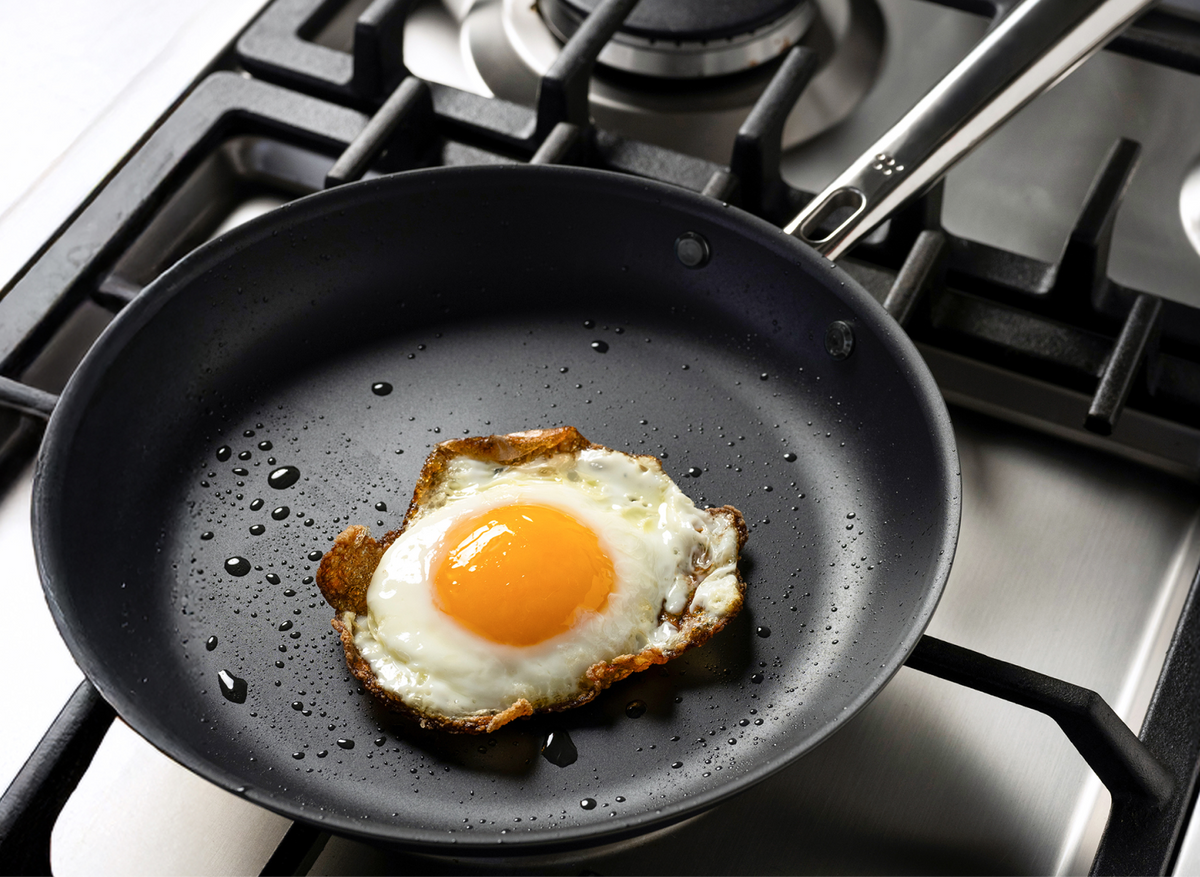
A fish turner earns its place as a daily driver by handling tasks well beyond fish. The thin, nearly sharp edge slides under pancakes, fried eggs, and cookies with more control than a standard spatula, while the slotted design works as an impromptu strainer when pulling poached eggs or fried foods from liquid.[11] The angled head is also effective for scraping stuck-on residue from stainless steel or carbon steel pans, and with some practice, it can emulsify a pan sauce directly in the skillet.[10] For cooks who use one all-purpose pan daily, a fish turner will genuinely consolidate what you're reaching for -- it covers more ground than its name suggests.[9]
Key Takeaways
- Blade angle of 72-74 degrees slides under fillets cleanly, preventing tearing
- 6.5-inch blade balances support and maneuverability in home skillets
- Wooden handles outperform rubber for wrist control and comfort
- Metal edges excel on steel pans; silicone edges protect nonstick
- Hand-wash wooden handles to prevent dishwasher warping and damage
References
- https://www.seriouseats.com/best-fish-spatula-slotted-offset-spatula
- https://www.thespruceeats.com/best-fish-spatulas-7100000
- https://www.foodandwine.com/best-fish-spatulas-11732845
- https://www.nytimes.com/wirecutter/reviews/best-spatula/
- https://americankitchen.com/blogs/table-talk/which-utensils-should-you-use-with-nonstick-cookware?srsltid=AfmBOopzM5ZyqbfTAjQ49JVjjCHW17ZalXm-_oC3oLCUI-oSX5z1H0yw
- https://www.restaurantsupply.com/blogs/food-service-buying-guide/understanding-the-professional-fish-spatula?srsltid=AfmBOoq-G7nLv-Bs6G4Jwwq4BoVd_C52OnDKUM0-6Zwih7guoZlzstvJ
- https://www.restaurantsupply.com/blogs/food-service-buying-guide/understanding-the-professional-fish-spatula?srsltid=AfmBOooOFRHTiwc_01tfPwnJtpOS1I7UZMkDOY5jb6QwXXXtdEbBmBoD
- https://www.webstaurantstore.com/guide/1062/types-of-spatulas.html?srsltid=AfmBOooW0-AXgmeYWyOKf-TFax6az3BXPMrZy_GCqkh5Eu4YSkAsu9wH
- https://www.bonappetit.com/story/fish-spatula?srsltid=AfmBOoqgWvMmbgREPPirxCZR-kXTnNQswbCwhPfo5dmnVXxt_9A0KmEc
- https://www.theguardian.com/thefilter-us/2025/dec/16/best-fish-spatulas
- https://www.thekitchn.com/why-the-mighty-fish-spatula-earned-a-spot-in-my-kitchen-225351